Finance
PMEGP Loan 2026: Get Up to ₹50 Lakh Business Loan With 35% Government Subsidy (Eligibility, Documents & How to Apply)

The PMEGP loan lets a first-time entrepreneur borrow up to 50 lakh inr from a bank to start a new business, while the Government of India pays back 15% to 35% of the project cost as a subsidy. For millions of people in India who have a business idea but not enough savings, it is one of the most valuable financing options available today.
PMEGP stands for the Prime Minister’s Employment Generation Programme. It was launched in 2008-09 by merging two older schemes: the Prime Minister’s Rozgar Yojana (PMRY) and the Rural Employment Generation Programme (REGP). The Ministry of Micro, Small and Medium Enterprises (MSME) runs the scheme, and the Khadi and Village Industries Commission (KVIC) is the national nodal agency that implements it.
The idea is simple. You prepare a project, a bank finances it, and the government contributes a chunk of the cost as “margin money.” If your unit runs successfully for three years, that subsidy never has to be repaid. In effect, a large part of your startup cost becomes free money.
Since its launch, the scheme has helped set up close to 8 lakh micro enterprises and has generated an estimated 64 lakh jobs across India. Whether you want to open a bakery, a printing unit, a beauty parlour, a furniture workshop or a small food processing plant, PMEGP can help you get started.
In this guide, you will learn everything about the PMEGP loan in 2026, including eligibility, subsidy rates, documents, the online application process, training rules, common rejection reasons and expert tips to get your loan approved faster.
PMEGP Scheme at a Glance
Before going deeper, here is a quick snapshot of the scheme’s key features.
| Feature | Details |
|---|---|
| Full name | Prime Minister’s Employment Generation Programme |
| Launched | 2008-09 |
| Ministry | Ministry of MSME, Government of India |
| National nodal agency | Khadi and Village Industries Commission (KVIC) |
| State-level agencies | State KVIC offices, KVIBs, District Industries Centres (DICs), Coir Board (for coir units) |
| Maximum project cost (manufacturing) | ₹50 lakh |
| Maximum project cost (service/business) | ₹20 lakh |
| Subsidy rate | 15% to 35% of project cost |
| Own contribution | 5% to 10% of project cost |
| Minimum age | 18 years |
| Income limit | None |
| Second loan for expansion | Up to ₹1 crore (manufacturing) |
| Application portal | KVIC PMEGP e-Portal (kviconline.gov.in) |
Scheme status in 2026
The current approved cycle of PMEGP ran from FY 2021-22 to FY 2025-26, with an outlay of about 13,554 crore inr. That cycle officially ended on March 31, 2026. The government told Parliament that the Expenditure Finance Committee has already met to consider continuing the scheme for the next five years, and the Union Budget 2026-27 set aside about 4,500 crore inr for PMEGP, a sharp jump from roughly 2,954 crore inr the year before.
What this means for you: the scheme is very much alive, but some subsidy releases have been held up until the formal continuation order comes. Always confirm the latest status with your bank branch or district KVIC office before you invest money in machinery or rent.
PMEGP Loan Eligibility Criteria
Any Indian citizen aged 18 or above can apply, and there is no upper income limit. The key condition is that the project must be a brand-new unit, not an existing business looking for fresh money.
Who can apply
- Individuals aged 18 years or above
- Self Help Groups (SHGs), including those under BPL, provided they have not taken benefits under any other scheme
- Institutions registered under the Societies Registration Act, 1860
- Production co-operative societies
- Charitable trusts
Education requirement
There is no education requirement for small projects. However, you must have passed at least Class 8 if your project cost is:
- Above 10 lakh inr in the manufacturing sector, or
- Above 5 lakh inr in the service or business sector
Who cannot apply
- Existing units, or units that have already received a government subsidy under PMRY, REGP or any other central or state scheme
- More than one person from the same family (the “family” means you and your spouse)
- Projects that fall under the negative list (covered later in this article)
General vs special category
Your category decides how much subsidy you get. Special category applicants include:
- SC, ST and OBC applicants
- Minorities
- Women
- Ex-servicemen
- Transgender persons
- Persons with disabilities
- Residents of the North Eastern Region, hill areas and border areas
- Applicants from Aspirational Districts
Everyone else falls under the general category.
PMEGP Loan Amount and Subsidy Rates
A special category applicant setting up in a rural area gets the best deal: a 35% subsidy and only 5% own contribution. The bank funds the remaining 60%.
Maximum project cost
| Sector | Maximum project cost eligible for subsidy |
|---|---|
| Manufacturing | ₹50 lakh |
| Service / business | ₹20 lakh |
If your project costs more than these limits, the bank may still finance the extra amount, but no subsidy will be paid on it.
Subsidy and contribution by category
| Category | Own contribution | Subsidy (urban) | Subsidy (rural) |
|---|---|---|---|
| General | 10% | 15% | 25% |
| Special (SC/ST/OBC/women/minority/ex-servicemen/transgender/divyang/NER/hill/border/aspirational district) | 5% | 25% | 35% |
How the money is split: a worked example
Suppose a woman entrepreneur in a village sets up a 20 lakh inr flour mill (manufacturing).
| Component | Share | Amount |
|---|---|---|
| Her own contribution | 5% | ₹1,00,000 |
| Government subsidy (margin money) | 35% | ₹7,00,000 |
| Bank loan (balance) | 60% | ₹12,00,000 |
| Total project cost | 100% | ₹20,00,000 |
Note that the bank first sanctions the full loan amount (19 lakh inr in this case). The 7 lakh inr subsidy is then kept in a fixed deposit (Term Deposit Receipt) in your name for three years. During that time, no interest is charged on the subsidy portion. If your unit is working after three years, the subsidy is adjusted against your loan, so you effectively repay only 12 lakh inr plus interest.
Maximum subsidy in rupees
- Manufacturing, special category, rural: up to 17.5 lakh inr
- Manufacturing, general category, urban: up to 7.5 lakh inr
- Service, special category, rural: up to 7 lakh inr
- Service, general category, urban: up to 3 lakh inr
PMEGP Second Loan for Business Expansion
If you already run a successful PMEGP, REGP or MUDRA unit, you can take a second loan of up to 1 crore inr to upgrade or expand it, with a 15% subsidy (20% in the North East and hill states).
| Feature | Manufacturing | Service / business |
|---|---|---|
| Maximum project cost | ₹1 crore | ₹25 lakh |
| Own contribution | 10% | 10% |
| Subsidy (all areas) | 15% | 15% |
| Subsidy (NER and hill states) | 20% | 20% |
| Maximum subsidy | ₹15 lakh (₹20 lakh in NER/hill) | ₹3.75 lakh (₹5 lakh in NER/hill) |
To qualify for the second loan, you generally need to meet these conditions:
- Your first loan was repaid on time, or is being repaid regularly
- Your unit has been running profitably and shows good turnover
- The first-loan subsidy has already been adjusted after the three-year lock-in
- The new money will be used for genuine expansion, modernisation or technology upgradation
This feature makes PMEGP useful not just for starting a business but also for growing it.
Documents Required for PMEGP Loan
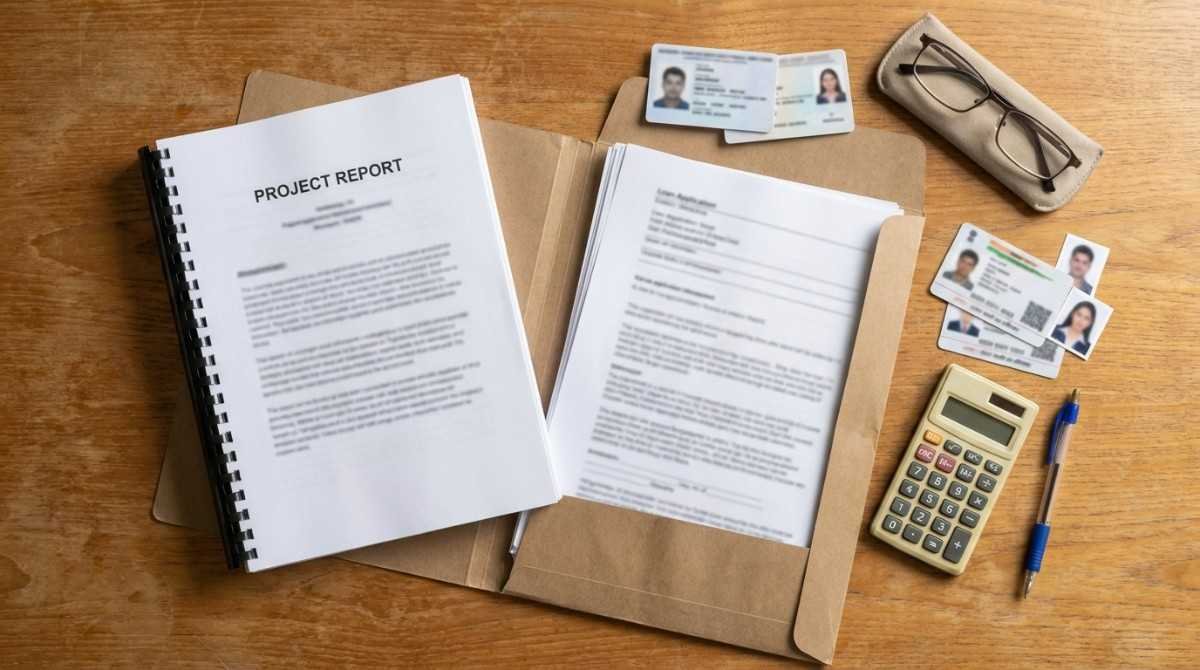
The most important document is a well-prepared project report; everything else is standard KYC and proof of category. Keep scanned copies ready in PDF or JPG format before you start the online form.
| Document | Why it is needed | Mandatory? |
|---|---|---|
| Aadhaar card | Identity and e-KYC on the portal | Yes |
| PAN card | Identity and bank records | Yes |
| Passport-size photograph | Application form | Yes |
| Detailed Project Report (DPR) | Shows project cost, machinery, profit and repayment plan | Yes |
| Caste certificate | To claim SC/ST/OBC special category subsidy | If applicable |
| Rural area certificate | To claim the higher rural subsidy | If applicable |
| Education certificate (Class 8 or above) | For projects above ₹10 lakh (manufacturing) or ₹5 lakh (service) | If applicable |
| EDP training certificate | Proof of completing entrepreneurship training | Before disbursement |
| Special category proof | Ex-servicemen, disability, minority certificate | If applicable |
| Bank account details | For disbursement and subsidy | Yes |
| Quotations for machinery | Supports the project cost | Usually asked by bank |
| Rent agreement or land/property papers | Proof of business premises | Usually asked by bank |
| Registration/by-laws | For SHGs, societies, trusts and co-operatives | If applicable |
Tips for a strong project report
- Use realistic machinery prices backed by actual supplier quotations
- Show clear monthly sales, expenses and profit for at least five years
- Include the number of jobs the unit will create (KVIC values this)
- Show a debt service coverage ratio (DSCR) of 1.5 or higher
- Keep working capital as part of the project cost, since PMEGP allows it
How to Apply for PMEGP Loan Online: Step-by-Step
The entire application is filed online on the KVIC PMEGP e-Portal, and there is no application fee. Here is how the process works from start to finish.

- Visit the official portal. Go to kviconline.gov.in and open the PMEGP e-Portal. Avoid agents or websites asking for money to “guarantee” approval.
- Choose the right form. Select “Application for New Unit” for a fresh business, or the upgradation option for a second loan.
- Fill in your details. Enter your Aadhaar number, name, category, education, address, and the implementing agency (KVIC, KVIB or DIC).
- Enter project details. Add the activity name, sector, location (rural or urban), capital expenditure, working capital and preferred bank branches.
- Upload documents. Attach your project report, caste or rural certificate and other files.
- Submit and save your ID. You will get an application ID and password. Use these to log in later and track your status.
- District-level scrutiny. The District Level Task Force Committee (DLTFC), headed by the District Collector, reviews your application. You may be called for a short interview.
- Bank appraisal. The application is forwarded to your chosen bank, which checks the project’s viability and may visit the site.
- Loan sanction. Once the bank approves, you receive a sanction letter.
- Complete EDP training. You must finish the Entrepreneurship Development Programme before the money is released.
- Loan disbursement. The bank releases the first instalment, and the margin money subsidy is claimed from KVIC.
- Physical verification. After three years, the unit is inspected. If it is running, the subsidy is adjusted against your loan.
How long does it take?
Approval timelines vary by district and bank. In practice, the process from application to disbursement often takes one to three months, but delays are common if documents are incomplete or the bank has a backlog.
EDP Training, Interest Rate, Collateral and Repayment
PMEGP loans carry normal bank interest rates, usually need no collateral thanks to CGTMSE cover, and are repaid over three to seven years after a short moratorium.
EDP training
The Entrepreneurship Development Programme (EDP) is compulsory for every beneficiary before the loan is released. It teaches basic business skills such as accounting, marketing, pricing, GST basics and managing workers. Training can be done online through the KVIC portal or offline at an approved training centre, and it is free of cost. Applicants who already hold a relevant EDP certificate from a recognised institute may be exempted.
Interest rate
There is no fixed PMEGP interest rate. Banks charge their regular MSME lending rates, which are linked to their external benchmark (usually the RBI repo rate). As a rough guide, rates in 2026 typically fall in the 8% to 12% per year range, depending on the bank, your credit score and the project’s risk. Ask two or three banks for quotes before choosing.
Collateral and guarantee
- PMEGP loans are eligible for cover under the Credit Guarantee Fund Trust for Micro and Small Enterprises (CGTMSE)
- Because of this cover, banks generally do not ask for property or third-party guarantee on PMEGP loans
- The machinery and assets bought with the loan are hypothecated to the bank as primary security
Repayment
| Feature | Typical terms |
|---|---|
| Repayment period | 3 to 7 years |
| Moratorium (initial grace period) | 6 to 18 months, at the bank’s discretion |
| Margin money lock-in | 3 years in a term deposit |
| Interest on subsidy portion | Not charged during lock-in |
| Subsidy adjustment | After 3 years, if the unit is verified as running |
Repaying on time matters a lot. Regular repayment protects your subsidy, builds your credit score and makes you eligible for the second loan later.
Eligible Businesses, Negative List and Approval Tips
Most non-farm manufacturing and service businesses qualify, but a short negative list is excluded, and most rejections come from weak project reports rather than ineligibility.
Popular businesses under PMEGP
| Manufacturing ideas | Service / business ideas |
|---|---|
| Flour mill, spice grinding | Beauty parlour, salon |
| Bakery and confectionery | Tailoring and boutique |
| Paper plate and cup making | Computer and mobile repair |
| Furniture and woodwork | Photocopy and printing shop |
| Agarbatti and candle making | Gym and fitness centre |
| Pickle, papad and snack making | Tent house and catering |
| Cement blocks and pavers | Cyber café and digital services |
| Dairy products (paneer, ghee) | Vehicle repair workshop |
Negative list (not allowed)
- Business connected with meat processing, or serving intoxicants like beer, liquor and toddy
- Manufacturing tobacco products such as bidi, cigarettes and pan masala
- Direct cultivation of crops, tea, coffee, rubber, sericulture and horticulture plantations
- Manufacturing polythene carry bags thinner than the legal limit, and other banned plastic items
- Activities banned by the state or local authority on environmental or social grounds
- Hotels or dhabas that serve alcohol
Allied activities such as food processing, poultry, fisheries and beekeeping linked to a processing unit are generally allowed. Check the latest negative list on the KVIC portal for your state.
Common reasons for rejection
- Unrealistic or copy-paste project report
- Poor CIBIL score or past loan default
- Applying for an activity on the negative list
- Incomplete or mismatched documents
- Choosing a bank branch far from the project site
- Not attending the DLTFC interview
Expert tips to get approved faster
- Choose an activity you understand, ideally one where you have work experience.
- Pick a bank branch close to your business location; banks prefer local borrowers.
- Keep your CIBIL score above 650 and clear any small overdue loans first.
- Visit the branch manager in person after applying and follow up politely.
- Show a ready business premises and supplier quotations.
- Complete EDP training early so it does not delay disbursement.
PMEGP Loan: Pros and Cons
| Pros | Cons |
|---|---|
| Subsidy of up to 35% that never has to be repaid | Approval can be slow in some districts |
| Low own contribution of just 5% to 10% | Subsidy is locked for three years |
| No income limit for applicants | Only new units qualify for the first loan |
| Usually no collateral needed (CGTMSE cover) | Interest rate is not subsidised |
| Covers both capital cost and working capital | Subsidy release depends on scheme funding |
| Second loan of up to ₹1 crore for expansion | Strong project report needed for approval |
Frequently Asked Questions
Is the PMEGP loan free money? No. It is a bank loan with a government subsidy attached. You repay the loan with interest, but the subsidy portion is waived if your unit runs for three years.
Can a woman get a higher subsidy under PMEGP? Yes. Women are special category applicants and get 25% subsidy in urban areas and 35% in rural areas.
What is the PMEGP loan interest rate in 2026? There is no fixed rate. Banks charge normal MSME rates, typically around 8% to 12% a year.
Do I need collateral for a PMEGP loan? Usually not. PMEGP loans are eligible for CGTMSE guarante


Hotshot Trucking Insurance: What It Really Costs, What You Actually Need, and How I Help Fellow Operators Stop Paying Too Much

Commercial Auto Insurance Quotes: How I Stopped Guessing and Started Comparing — A Complete Guide for Owner-Operators in 2026

Bobtail Insurance: What It Costs, What It Covers, and Why Skipping It Was Almost the Biggest Mistake of My Trucking Career

Will AI Replace Truck Drivers? Here Is What the Data Actually Says in 2026
