Trucking Business
Commercial Truck Insurance: What I Learned the Hard Way Before My First Big Haul

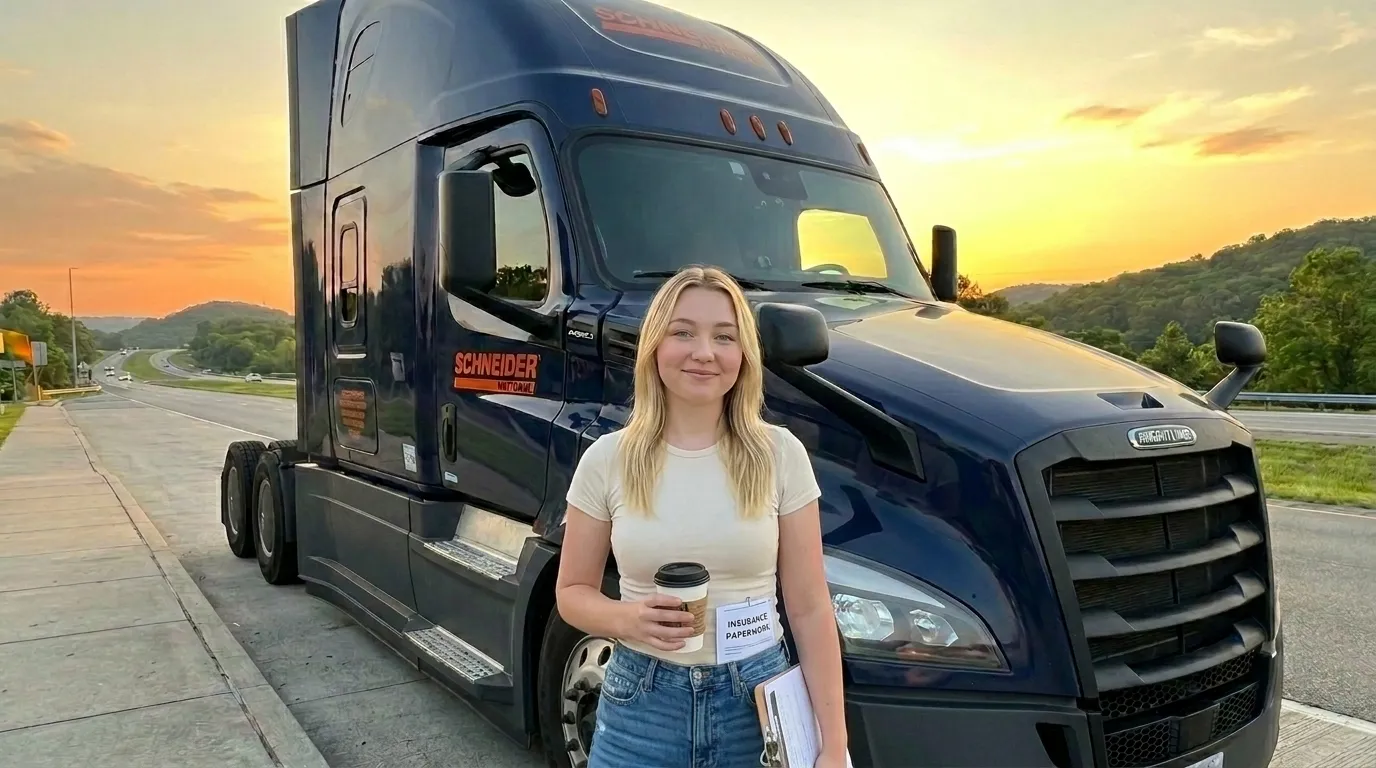
I still remember sitting at my kitchen table at 11 PM, coffee gone cold, staring at a stack of insurance quotes that made absolutely no sense to me. Numbers everywhere. Terms I had never heard before. Premiums that ranged from $8,000 to $31,000 annually — for what felt like the same coverage on paper.
That was three years ago, right before I signed the paperwork on my first truck. A 2019 Freightliner Cascadia that I had saved for, dreamed about, and was absolutely terrified of insuring correctly. I was an owner-operator stepping into this industry without a mentor, without a fleet manager to call, and without anyone in my family who had ever touched a commercial vehicle. Just me, my research, and a whole lot of late nights.
What I found out over the following months — through conversations with brokers, other drivers at truck stops, online communities, and a few expensive mistakes — changed the way I look at commercial truck insurance entirely. And I want to share all of it with you here, because nobody should have to figure this out alone.
What Commercial Truck Insurance Actually Is
Most people assume commercial truck insurance is just like regular car insurance, only bigger. That assumption will cost you money — sometimes a lot of it.
Commercial truck insurance is not a single policy. It is a collection of coverages that work together to protect you, your vehicle, your cargo, and anyone else on the road. Depending on whether you are an owner-operator running under your own authority, leased to a carrier, or managing a small fleet, the combination of coverages you need will look completely different.

The foundation of any commercial truck insurance setup is primary liability. This is the coverage required by federal law for any truck operating commercially on public roads.
The Federal Motor Carrier Safety Administration mandates a minimum of $750,000 in liability coverage for general freight carriers, and up to $5,000,000 for carriers hauling hazardous materials. This coverage protects other people — other drivers, pedestrians, property — in the event that you are at fault in an accident. It does not protect your truck or your cargo.
That is the part that surprised me most when I first started. You can be fully compliant with federal liability requirements and still be completely unprotected when it comes to your own equipment.
The Coverages That Actually Matter
After weeks of research and too many phone calls to count, I built a clear picture of what commercial truck insurance actually consists of. Here is how the main coverages break down:
| Coverage Type | What It Protects | Who Needs It |
|---|---|---|
| Primary Liability | Third-party injuries and property damage | All commercial operators (federally required) |
| Physical Damage | Your own truck (collision + comprehensive) | Owner-operators with truck payments or significant asset value |
| Motor Truck Cargo | The freight you are hauling | Owner-operators responsible for cargo |
| Bobtail Insurance | Your truck when operating without a trailer | Owner-operators leased to a carrier |
| General Liability | Non-driving incidents (loading, unloading, premises) | Independent operators running their own authority |
When I was leased to my first carrier, my broker explained something that completely changed how I understood my situation. While under a carrier’s authority, their primary liability coverage applies when I am hauling their freight.
The moment I drop a trailer and drive my truck without a load — what is called bobtailing — I am no longer covered under their policy. That gap is exactly what bobtail insurance fills.
I almost skipped bobtail coverage to save money. My broker talked me out of it in about four minutes.
What Determines Your Premium
This is where things get personal — and where I made my first real mistakes.
When I got those wildly different quotes that first night, I thought the insurance companies were just making up numbers. In reality, every quote was responding to a different risk profile. Commercial truck insurance premiums are calculated based on a surprisingly long list of factors, and understanding them helped me bring my own costs down significantly over time.
Driving history is the single biggest factor. A clean Motor Vehicle Record with no violations in the past three to five years will earn you meaningfully lower rates. My record was clean coming in, and my broker told me it saved me somewhere between $3,000 and $5,000 annually compared to drivers with even one major violation on file.
Years of CDL experience matter enormously. New CDL holders are considered high-risk by most insurers, and premiums reflect that. Drivers with less than two years of commercial experience often pay 40 to 60 percent more than veterans with five or more years behind the wheel.
This is one of the reasons many new owner-operators choose to run under a carrier’s authority for a few years before going independent — it gives them time to build an insurable record.
The type of freight you haul has a dramatic effect on your cargo insurance rates. General dry freight is the most affordable to insure. Refrigerated goods, electronics, pharmaceuticals, and hazardous materials all carry higher premiums because the cargo itself is either more valuable, more volatile, or both.
Operating radius also plays a role. Local and regional operators generally pay less than long-haul drivers simply because more miles mean more exposure.
Your truck itself — age, value, safety features — factors into physical damage coverage costs. My 2019 Cascadia had a solid safety rating and modern collision avoidance systems, which helped bring my physical damage premium down compared to older trucks without those features.
The Owner-Operator Reality
I want to be honest about something that most insurance guides gloss over: the first year as an owner-operator is financially brutal, and insurance is a major reason why.
When I launched under my own authority, my total annual insurance cost came in just under $16,000. For someone running a new trucking business, that is not a small number. It broke down roughly like this:
- Primary liability: $9,200
- Physical damage: $4,100
- Motor truck cargo: $1,800
- General liability: $800
That $16,000 had to be paid regardless of whether I had loads, regardless of fuel prices, regardless of whether the truck was in the shop. It was a fixed cost that I had to plan around from day one.
What helped me manage it was working with an independent broker rather than going directly to a single insurer. Independent brokers shop your profile across multiple carriers and can often find combinations of coverage that a single company cannot offer competitively. My broker found me a cargo policy through a specialty insurer that saved me about $600 annually compared to what the liability carrier quoted for the same coverage.
It also helped to pay annually rather than monthly. Monthly payment plans typically carry financing fees that add 10 to 15 percent to your total annual cost. If you can manage the cash flow to pay upfront, the savings are real.
What Happens When You File a Claim
Nobody likes to talk about this part. I did not have a major accident in my first three years, but I did have one incident — a backing collision at a dock that caused minor damage to my trailer landing gear. The claim was small, under $2,000, but the experience taught me things I wish I had known going in.

First, even small claims can affect your renewal premium. After my incident, my physical damage rate increased by about $400 at renewal. That does not mean you should avoid filing legitimate claims — the coverage exists for exactly that purpose — but it does mean you should weigh small claims carefully against your deductible and long-term premium impact.
Second, documentation is everything. The drivers who have smooth claims experiences are the ones who have dashcam footage, written incident reports, and photos taken immediately after any event. I invested in a dual-facing dashcam in my first month of operation, and my broker told me it likely contributed to a slightly better rate at my second renewal because it demonstrated that I was operating a professionally managed vehicle.
Third, your relationship with your broker matters when things go wrong. Having someone who knows your file, your history, and the details of your operation is worth far more than saving $200 by going with the cheapest online quote you can find.
Practical Tips Before You Buy
If you are approaching commercial truck insurance for the first time — whether as a new owner-operator or someone transitioning from leased to independent — here are the things I wish someone had told me clearly:
- Get at least three quotes from independent brokers, not just direct insurers. The spread in pricing for identical coverage can be shocking.
- Understand your lease agreement before buying anything. If you are leased to a carrier, know exactly what their policy covers and where the gaps are.
- Ask specifically about deductibles. A lower premium with a $10,000 physical damage deductible may be worse for your cash flow than a slightly higher premium with a $2,500 deductible.
- Check the insurer’s financial rating. An A.M. Best rating of A or better means the company has the financial strength to actually pay claims. Do not insure a $150,000 truck with a carrier that might not be around when you need them.
- Review your policy annually. Your business changes. Your routes change. Your freight type may change. An annual review ensures your coverage still matches your actual operation.
The Bottom Line
Commercial truck insurance is not the most exciting part of running a trucking business. But it is one of the most important decisions you will make as an owner-operator, and the difference between a policy that truly protects you and one that leaves you exposed can be tens of thousands of dollars in an emergency.
Three years in, my insurance situation looks very different from that first panicked night at the kitchen table. I have a broker I trust, a renewal process I understand, and a premium that has actually decreased as my record and experience have grown. It took time, mistakes, and a lot of questions to get here.
Ask every question. Read every line. And never assume that being covered and being protected are the same thing.
Stella Brown is an independent owner-operator and writer based in Tennessee. She covers trucking business, life on the road, and the financial realities of running a one-truck operation. She has been hauling dry freight across the Southeast for three years and is still learning something new every week.
ENJOY TRUCKING WITH ME?


Hotshot Trucking Insurance: What It Really Costs, What You Actually Need, and How I Help Fellow Operators Stop Paying Too Much

Commercial Auto Insurance Quotes: How I Stopped Guessing and Started Comparing — A Complete Guide for Owner-Operators in 2026

Bobtail Insurance: What It Costs, What It Covers, and Why Skipping It Was Almost the Biggest Mistake of My Trucking Career

Will AI Replace Truck Drivers? Here Is What the Data Actually Says in 2026
