Carrier
Will AI Replace Truck Drivers? Here Is What the Data Actually Says in 2026

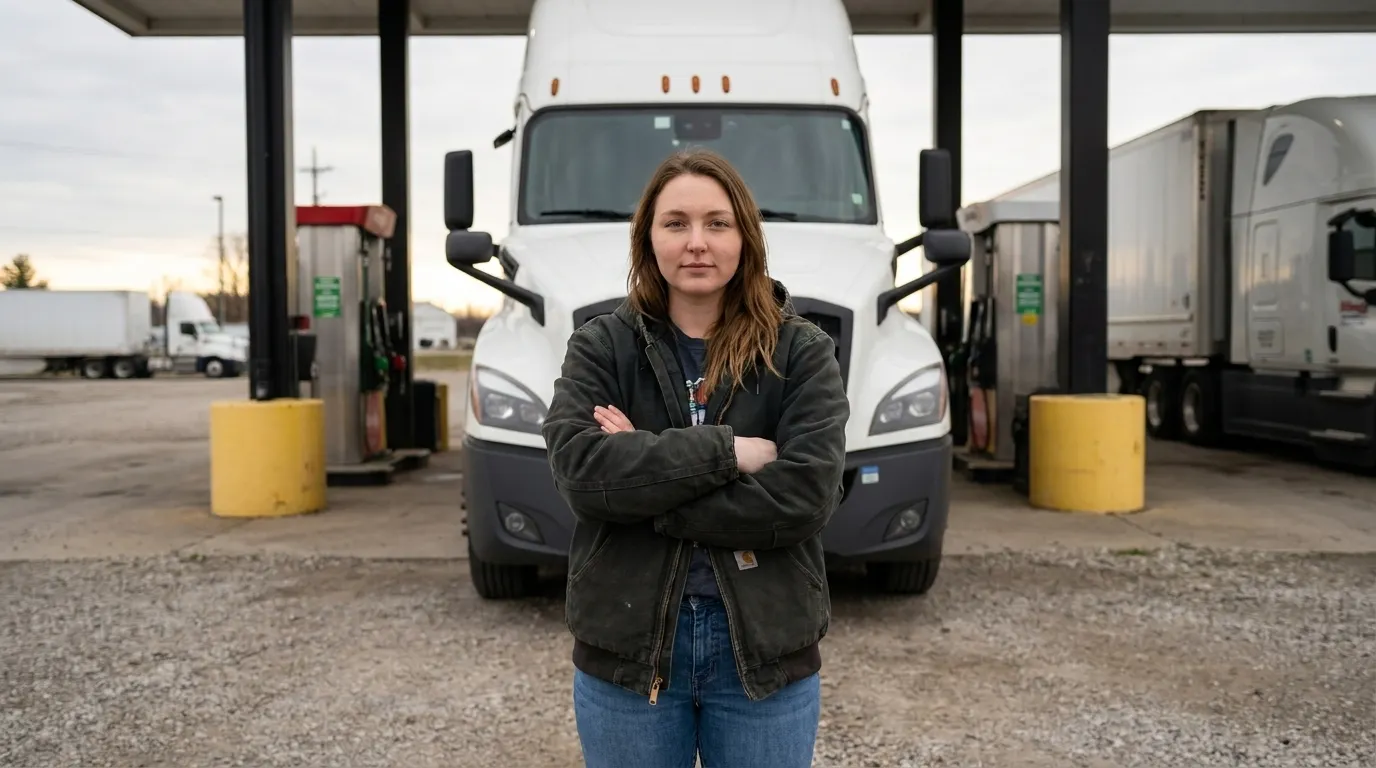
I was fueling up at a Flying J outside Columbus last spring when a guy at the next pump looked over at my truck and said, “You know they’re going to replace all of you with robots, right?”
He said it casually. Like he was telling me rain was coming.
I have been hearing some version of that comment for three years now. At truck stops. In comment sections. From well-meaning relatives at Thanksgiving who read one headline about Tesla or Waymo and suddenly became experts in autonomous freight logistics.
Here is what I have learned from spending the last two years actually researching this question — not from headlines, but from industry reports, FMCSA data, conversations with fleet managers, and a lot of time thinking about what I do every single day behind the wheel of a commercial truck.
The answer is more complicated than either side of this debate wants to admit. And the data — actual data, not fear or hype — tells a story that every truck driver in America deserves to hear clearly.
Where AI in Trucking Actually Stands in 2026
Let us start with what is real right now, today, on American roads. Autonomous trucking technology exists. It is being tested. Several companies have run significant miles on select highway routes with varying levels of human supervision.
Waymo Via, Aurora Innovation, and Kodiak Robotics are among the most advanced players in the space, and they have collectively logged millions of test miles on public roads.
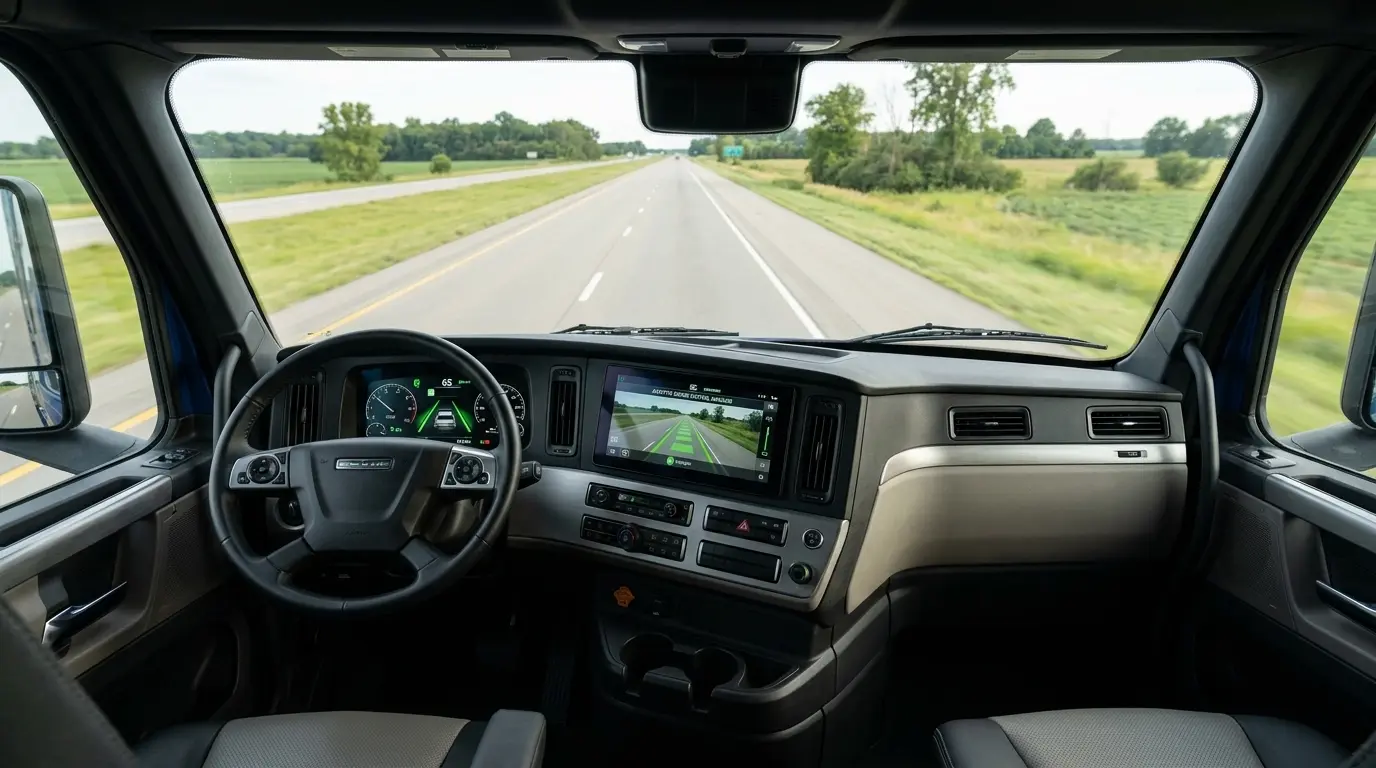
That sounds alarming until you look at the details. As of 2026, there is not a single fully autonomous commercial trucking operation running without a human safety driver present in the cab on public roads at commercial scale in the United States. Not one.
The technology exists in controlled testing environments and on specific pre-mapped highway corridors under carefully managed conditions. It does not yet exist as a replacement for what professional truck drivers do across the full complexity of real-world commercial freight operations.
Aurora Innovation, one of the most well-funded autonomous trucking companies in the world, has been preparing for driverless commercial launches for several years and has faced repeated timeline delays as the technical and regulatory challenges have proven more stubborn than early projections suggested.
That is not a dismissal of the technology. It is an honest accounting of where things actually stand.
What AI Can — and Cannot — Do Behind the Wheel
Understanding the real threat requires understanding what autonomous driving technology is genuinely good at and where it still fails in ways that matter enormously for commercial freight.
| Task | AI Capability in 2026 | Human Advantage |
|---|---|---|
| Highway cruising on mapped routes | Strong — consistent, fatigue-free performance | Minimal on ideal conditions |
| Adverse weather driving | Significant limitations — snow, heavy rain, fog degrade sensor performance | Strong — experienced drivers navigate severe weather daily |
| Urban and city driving | Weak — unpredictable environments, construction zones, pedestrians | Very strong — human judgment handles complexity |
| Backing into docks | Limited — works in controlled, pre-mapped facilities only | Strong — drivers handle hundreds of unique dock configurations |
| Cargo securement and inspection | None — AI cannot physically secure or inspect freight | Fully human responsibility |
| Customer and facility interaction | None — AI cannot communicate with dock workers or receivers | Fully human responsibility |
| Unexpected road events | Improving but inconsistent — edge cases remain a major challenge | Strong — human drivers handle novel situations instinctively |
The honest picture is that AI is very good at the predictable, repetitive, highway portion of a long-haul run. It is significantly weaker at everything that happens before the truck gets on the interstate and after it exits.
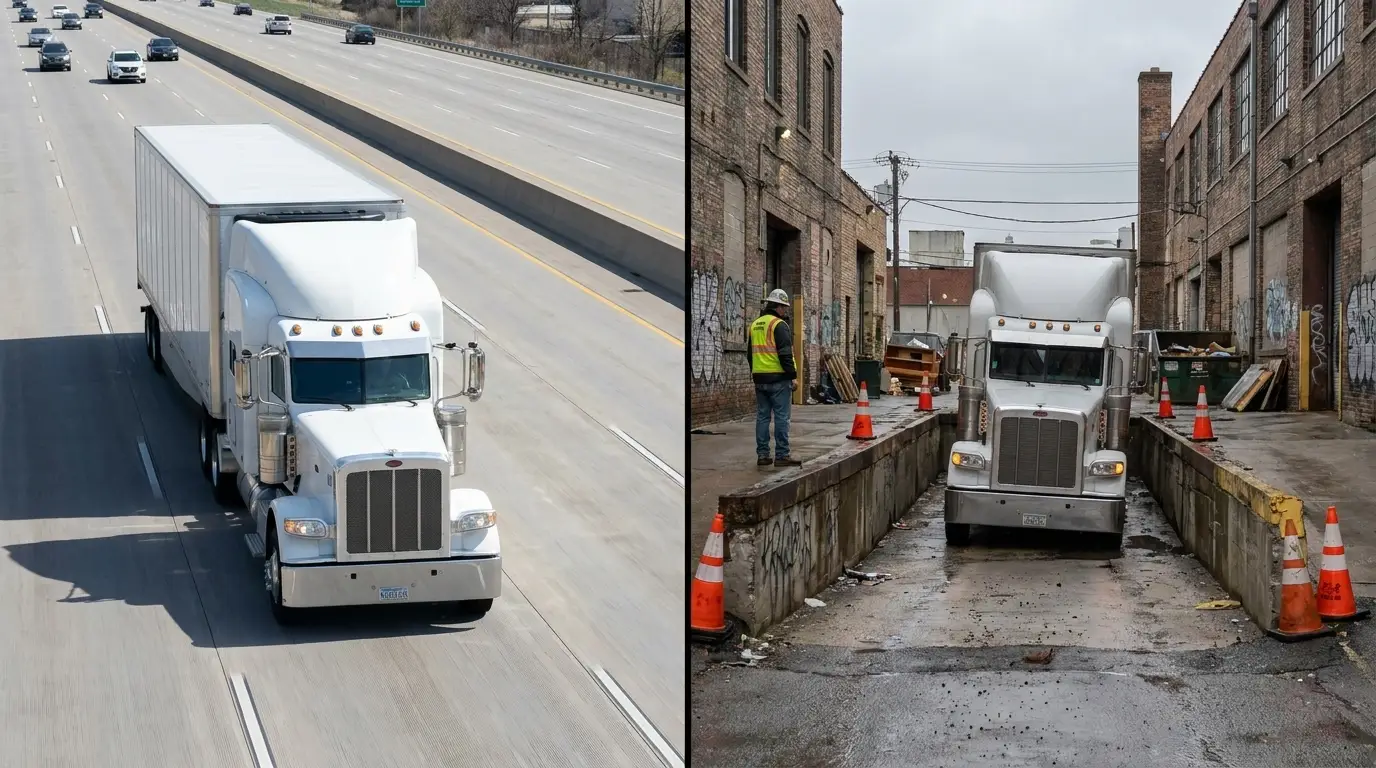
And here is the thing that most people writing scary headlines about robot trucks do not understand: the highway portion is only part of what a commercial truck driver actually does.
The Last Mile Problem Nobody Talks About
Imagine an autonomous truck successfully completing a 400-mile highway run from a distribution center in Columbus to a delivery facility in Nashville. The AI handled the interstate beautifully. Consistent speed. Perfect lane discipline. Zero fatigue.
Now the truck needs to exit the highway, navigate surface streets through an industrial area with construction, back into dock number seven at a facility it has never visited before, have the paperwork checked by a receiver who has a question about the load, and then reposition for a pickup before heading back out.
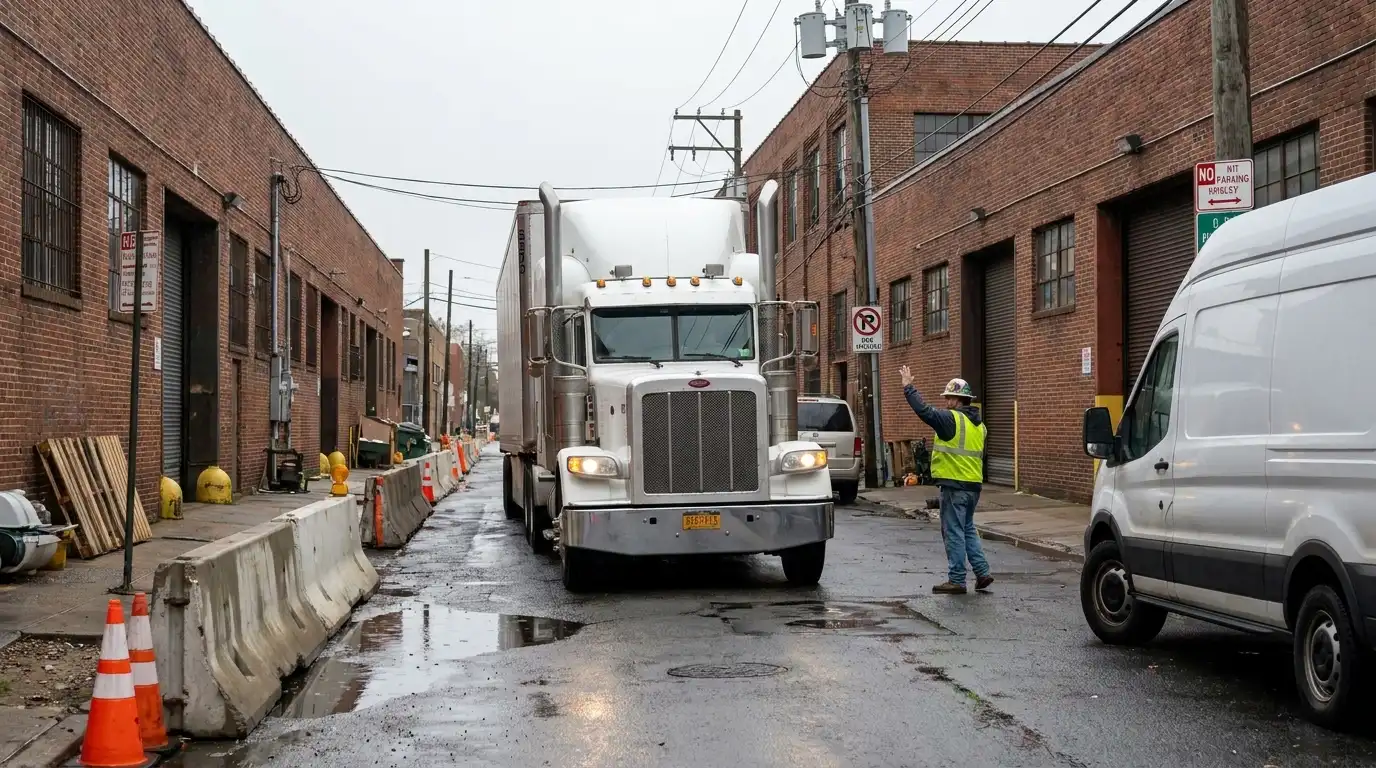
That sequence — which happens at the end of essentially every commercial freight run in America — involves physical dexterity, verbal communication, spatial judgment in unmapped environments, and adaptive decision-making that current AI systems cannot reliably perform.
The industry term for this challenge is the “last mile problem,” and it is one of the most significant barriers to full autonomous freight deployment that researchers and engineers are still actively working to solve.
Until that problem is solved — genuinely solved, not partially addressed — fully driverless commercial trucking at national scale is not a realistic near-term outcome.
What the Driver Shortage Data Actually Tells Us
Here is a data point that rarely makes it into the “robots are coming for truck drivers” headlines.
The American Trucking Associations has documented a significant and growing truck driver shortage in the United States that is expected to worsen over the coming decade as a large portion of the current driver workforce reaches retirement age.
The industry needs to recruit hundreds of thousands of new drivers over the next several years just to maintain current freight capacity — before accounting for projected freight volume growth.
Think about what that means in the context of autonomous vehicle development timelines. The trucking industry is simultaneously facing a shortage of human drivers and a technology that is still years away from commercial scale deployment.
Those two realities do not suggest a workforce about to be eliminated. They suggest a workforce that is going to remain in high demand for a significant period — and that will eventually work alongside AI-assisted technology rather than be replaced by it outright.
The drivers most at risk are not the ones working today. Industry analysts who study autonomous vehicle deployment timelines consistently point to a gradual transition measured in decades, not years — with significant regional, route-type, and freight-category variation in how and when automation affects different parts of the industry.
How AI Is Actually Affecting Trucking Right Now
While the full autonomy debate continues, AI is already changing the trucking industry in ways that are practical, present, and worth understanding.
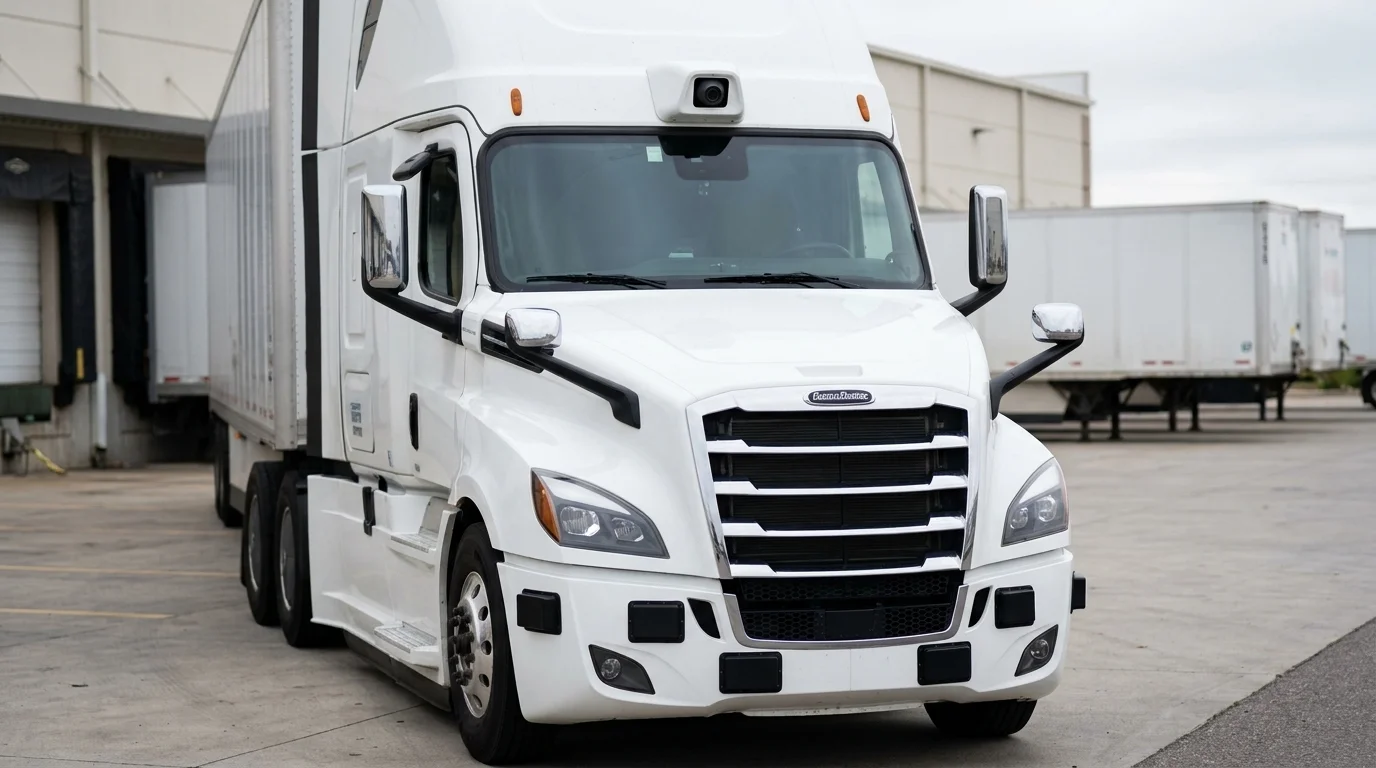
Advanced Driver Assistance Systems (ADAS) are now standard or available on most new commercial trucks. Automatic emergency braking, lane departure warnings, adaptive cruise control, and collision mitigation technology are AI-powered features that are actively reducing accident rates and, importantly, reducing insurance premiums for operators who run equipped vehicles.
AI-powered dispatch and load matching platforms are making it faster and more efficient for owner-operators to find loads, optimize routes, and reduce empty miles. These tools help drivers earn more per week — they do not replace drivers, they make drivers more productive.
Predictive maintenance technology uses AI to analyze vehicle data and flag potential mechanical issues before they become breakdowns. For an owner-operator, a breakdown on the road is lost revenue, a missed delivery, and potentially thousands in emergency repair costs. AI that helps prevent that has direct financial value.
AI dashcam systems that monitor driver behavior, flag fatigue indicators, and provide real-time coaching are being adopted by fleets and increasingly by individual owner-operators who recognize that the data these systems collect can support favorable insurance pricing at renewal.
None of these applications replace truck drivers. All of them change what the job looks like and, used correctly, make drivers safer, more efficient, and more valuable.
What Experienced Drivers and Industry Analysts Actually Predict
I spent time in several trucking industry forums and communities asking experienced drivers and fleet managers what they actually believe about autonomous trucking timelines. The responses were notably consistent.
Drivers with ten or more years of experience — the ones who have seen previous waves of technology predicted to transform the industry — are largely skeptical of near-term full autonomy at commercial scale.
They point to the regulatory environment, the infrastructure requirements, the liability framework gaps, and the sheer operational complexity of real-world freight as barriers that headlines consistently underestimate.
Industry analysts who follow autonomous vehicle development professionally offer a more nuanced picture. Most credible projections suggest:
- Highway platooning — convoys of trucks where a human-driven lead truck is followed by automated trucks — is likely to see commercial deployment within the next several years on specific well-mapped corridors
- Fully driverless hub-to-hub operations on controlled interstate routes may emerge at limited commercial scale within five to ten years in favorable regulatory environments
- Full replacement of human drivers across the broad complexity of commercial freight — urban delivery, regional operations, specialty freight, last-mile logistics — is a multi-decade proposition at minimum
- The most likely near-term outcome is a hybrid model where AI handles highway segments while human drivers manage origin and destination operations
That hybrid model, if it materializes as projected, does not eliminate truck driver jobs. It changes them — potentially reducing per-driver mileage on long highway runs while increasing the value of drivers who can handle complex terminal and urban operations.
What This Means for Drivers Working Today
I want to be direct here because I think truck drivers deserve honesty more than they deserve false comfort or unnecessary panic.
Autonomous trucking technology is real, it is being funded at massive scale, and it will eventually change parts of this industry in significant ways. Pretending otherwise is not honest and it does not serve drivers well.
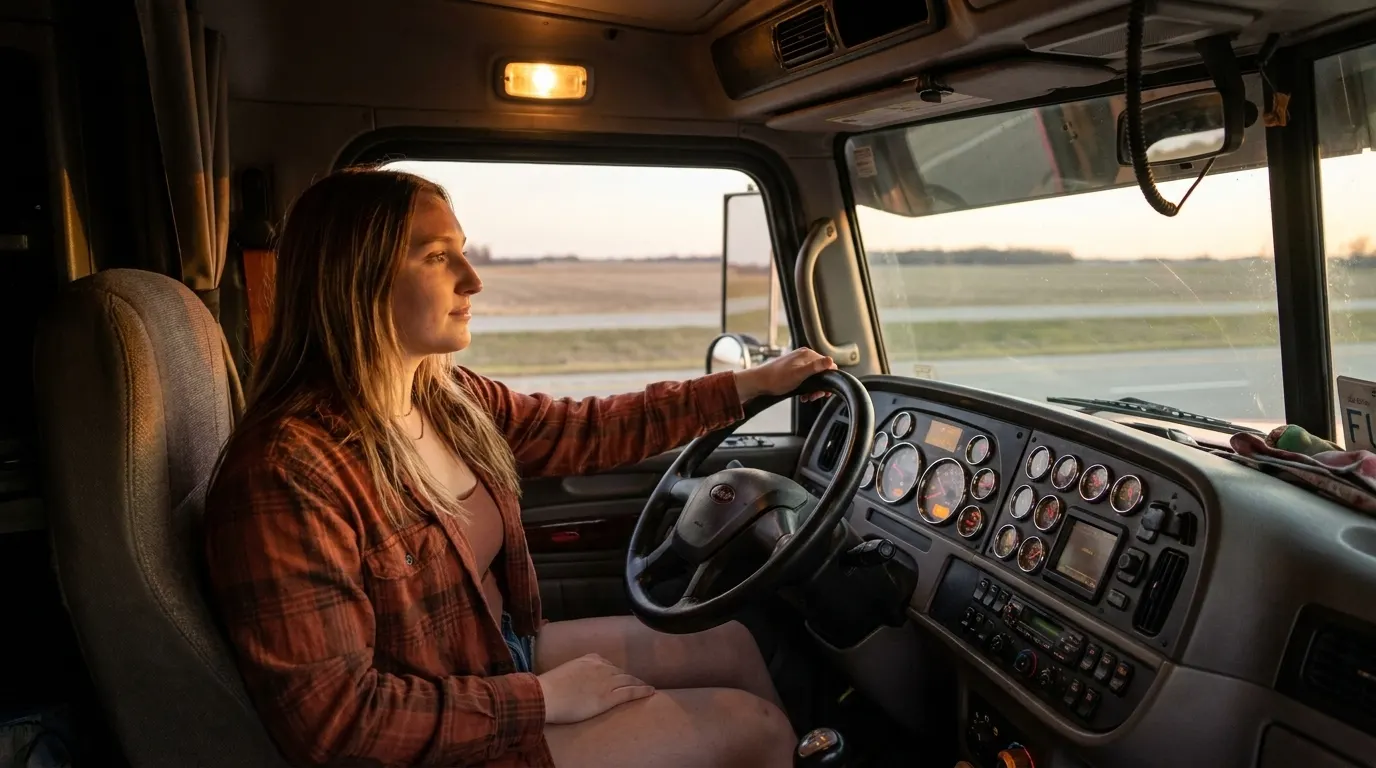
What is also true is that the timeline for that change is measured in years and decades, not months. The regulatory frameworks do not yet exist. The technology has not solved its most significant real-world challenges. The infrastructure requirements are enormous. And the industry currently needs more drivers, not fewer.
The drivers most likely to be affected first are those running consistent, predictable, long-haul highway routes between major hub facilities — the most automatable segment of the work. Drivers who handle regional operations, urban deliveries, specialty freight, and complex customer relationships are significantly further from meaningful automation risk.
The practical advice I give to drivers in my network is this: stay current on the technology, understand which parts of your work are most and least automatable, build skills in the complex operational areas that AI cannot replicate, and do not make career decisions based on headlines written by people who have never backed a 53-foot trailer into a tight dock in the rain.
The Bottom Line
Will AI replace truck drivers? Eventually, in some form, for some portion of the work — almost certainly yes.
Will it happen soon enough to affect the career prospects of drivers working today or entering the industry in the next several years? The data says no.
The guy at the Flying J who told me robots were coming for my job was not entirely wrong. He was just about twenty years early and missing about ninety percent of the context.
I am still driving. The freight still needs to move. And the last time I checked, there was no AI system on earth that could back my truck into dock seven at a facility it has never seen before, charm the grumpy receiver into signing off quickly, and still make my next pickup window two hundred miles away.
That skill set still has a lot of miles left in it.
Stella Brown is an independent owner-operator based in Columbus, Ohio, hauling dry freight across the Midwest and Southeast. She writes about the trucking industry, owner-operator business strategy, and the real-world intersection of technology and life on the road. She has been driving under her own authority for three years and is not worried about robots — yet.
ENJOY TRUCKING WITH ME?


Hotshot Trucking Insurance: What It Really Costs, What You Actually Need, and How I Help Fellow Operators Stop Paying Too Much

Commercial Auto Insurance Quotes: How I Stopped Guessing and Started Comparing — A Complete Guide for Owner-Operators in 2026

Bobtail Insurance: What It Costs, What It Covers, and Why Skipping It Was Almost the Biggest Mistake of My Trucking Career

Will AI Replace Truck Drivers? Here Is What the Data Actually Says in 2026
