Trucking Business
I Earned My CDL at 26 With No Experience — Here Is Everything I Wish Someone Had Told Me First

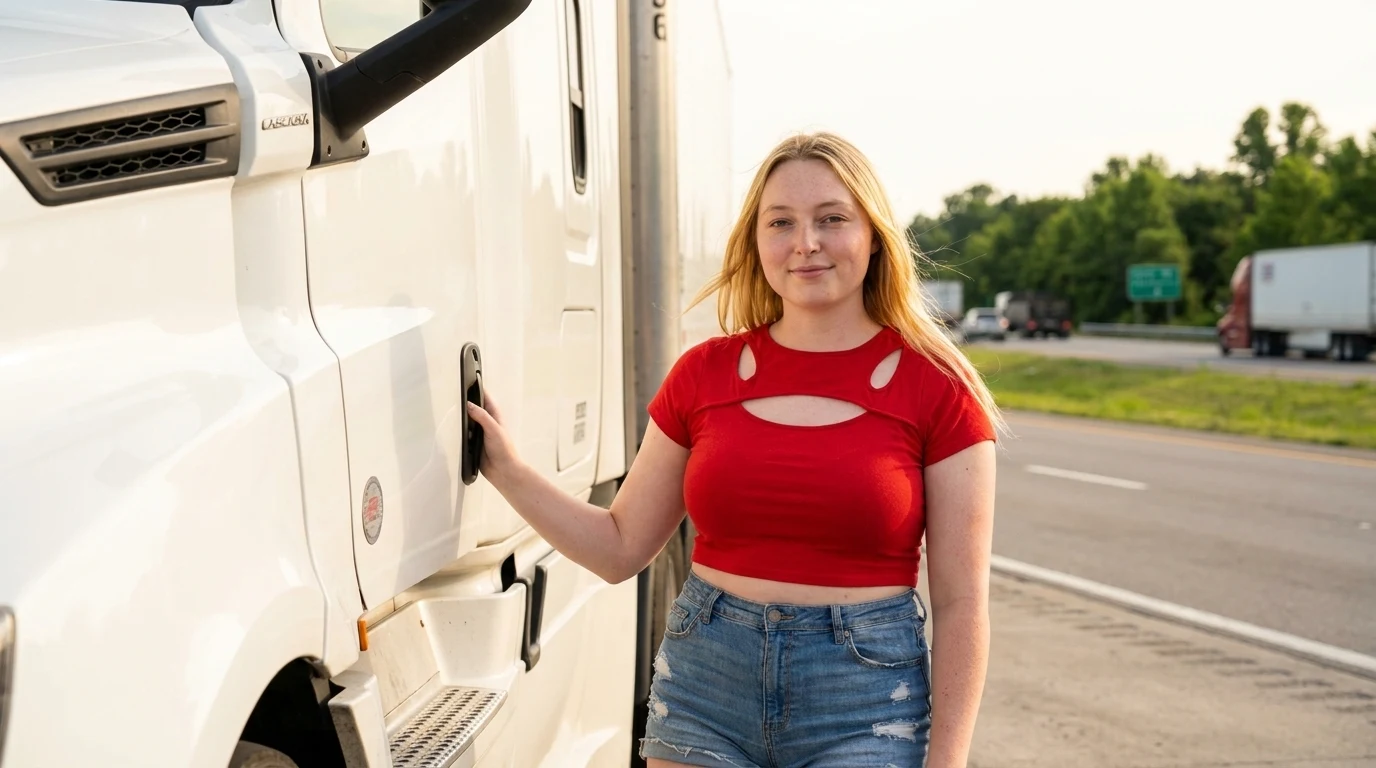
I was 26 years old, sitting in a plastic chair at a trucking school in Nashville, Tennessee, surrounded by guys half my age who had grown up around diesel engines and farm equipment. I had spent the last twelve years working a desk job at an insurance company, and the biggest vehicle I had ever driven was a Ford Explorer.
Everyone in that room thought they knew what they were doing. I absolutely did not.
What followed was eight weeks of the most challenging, humbling, and ultimately life-changing training I have ever gone through. And when I walked out with my Commercial Driver’s License in hand, I felt something I had not felt in years — like I had genuinely earned something hard.
Three years later, I am running my own truck, making more money than I ever did behind a desk, and I have driven through 38 states. But none of that happened by accident. It happened because I eventually figured out the CDL process — slowly, expensively, and sometimes the hard way.
This article is everything I needed before I started. The real process, the real costs, the real timeline, and the things nobody puts in the brochure.
What Is a CDL and Why Does It Matter
A Commercial Driver’s License is a federally regulated license that allows you to legally operate large commercial vehicles in the United States. Without it, you cannot legally drive a vehicle over 26,001 pounds, transport hazardous materials in federally regulated quantities, or operate a vehicle designed to carry 16 or more passengers including the driver.
The CDL is not just a bigger version of your regular driver’s license. It is an entirely separate credential with its own written tests, skills evaluations, physical requirements, and federal oversight. The rules governing CDLs are set by the Federal Motor Carrier Safety Administration and apply across all 50 states, which means your CDL earned in Texas is valid when you are hauling freight through Montana.
There are three classes of CDL, and understanding the difference before you start training will save you from a very expensive mistake:
| CDL Class | Vehicle Type | Common Jobs | Earning Potential |
|---|---|---|---|
| Class A | Combination vehicles over 26,001 lbs with towed unit over 10,000 lbs | 18-wheeler driver, long-haul trucker, tanker driver | $55,000 – $100,000+ |
| Class B | Single vehicles over 26,001 lbs or towing under 10,000 lbs | Bus driver, dump truck, delivery truck | $40,000 – $70,000 |
| Class C | Vehicles not covered by A or B carrying hazmat or 16+ passengers | Hazmat transport, passenger van services | $38,000 – $65,000 |
I went straight for my Class A. If you are serious about trucking as a career — especially if you want to eventually run your own truck — Class A is the only license worth getting. It gives you access to the widest range of jobs and the highest earning potential, and a Class A holder can also operate Class B and C vehicles.
The Basic Requirements Before You Even Start
Before you walk into a CDL training program or pick up a study guide, you need to meet a set of baseline federal and state requirements. I assumed I would automatically qualify. I was right, but I should not have assumed — there are real disqualifiers that catch people off guard.
- Age: You must be at least 18 to obtain a CDL for intrastate driving (within your state only). To drive commercially across state lines — which is where the real money is — you must be 21 or older.
- Regular driver’s license: You must hold a valid standard driver’s license in your state of residence with no current suspension or revocation.
- Medical certification: Federal law requires a DOT physical examination performed by a licensed medical examiner on the FMCSA National Registry. You must be medically certified to operate a commercial vehicle.
- Social Security Number: Required for CDL application in all states.
- State residency: You can only hold a CDL from one state — your state of legal domicile.
- No disqualifying offenses: Certain criminal convictions, particularly felonies involving a commercial vehicle, can permanently disqualify you. DUI convictions within the past several years will also affect your eligibility.
The DOT physical was the part that surprised me most. I went in thinking it was a formality. It is not. The exam checks vision, hearing, blood pressure, cardiovascular health, and several other markers relevant to operating a large vehicle safely over long distances. I had slightly elevated blood pressure at my first appointment and had to come back two weeks later after managing it with diet changes. That delay pushed my training start date back almost a month.
Get your DOT physical done early. Do not wait until the week before training starts.
The CDL Training Process — Step by Step
This is the part most guides rush through, and it is the part that actually determines whether you succeed. Here is the real sequence, exactly as I went through it.
Step 1: Obtain Your Commercial Learner’s Permit (CLP)
Before you can begin behind-the-wheel training, you must obtain a Commercial Learner’s Permit from your state’s DMV. This requires passing a series of written knowledge tests covering general commercial driving rules, air brakes (if you plan to operate air brake equipped vehicles, which most Class A trucks use), and combination vehicles.

The CLP knowledge tests are entirely based on your state’s CDL manual, which is available free online. I spent three weeks studying mine every evening before applying. The tests are multiple choice, but do not underestimate them — the air brakes section in particular is detailed and technical. I failed my first air brakes practice test with a score of 54. Studied harder. Passed the real thing with a 92.
Once issued, your CLP must be held for a minimum of 14 days before you can take your CDL skills test. Most training programs are designed around this requirement.
Step 2: Choose Your Training Program
This is the most important decision in the entire CDL process, and it is where I see people make the most costly mistakes. There are three main paths to CDL training:
| Training Path | Cost | Timeline | Best For |
|---|---|---|---|
| Company-Sponsored (Carrier Paid) | Free to low cost | 3 – 6 weeks | People who want to start working immediately and are comfortable with a 1-year commitment to the sponsoring carrier |
| Private Trucking School | $3,000 – $10,000 | 3 – 8 weeks | People who want flexibility in choosing their employer after training |
| Community College Program | $1,500 – $5,000 | 4 – 16 weeks | People who want lower cost training with financial aid options |
I chose a private trucking school and paid $6,800 out of pocket. Looking back, I do not regret it. The freedom to choose my first employer without being locked into a carrier contract was worth the cost to me personally. But I know drivers who did company-sponsored training, fulfilled their contract year, and came out with zero training debt and 12 months of driving experience. Both paths work.
What matters most is that since February 2022, all Entry Level Driver Training programs must be registered with the FMCSA’s Training Provider Registry. Always verify that any school you consider is listed on that registry before you pay a single dollar.
Step 3: Complete Your Behind-the-Wheel Training
This is where it gets real. CDL training is divided into range time — practicing maneuvers in a controlled area — and road time, where you drive actual routes on public roads under instructor supervision.
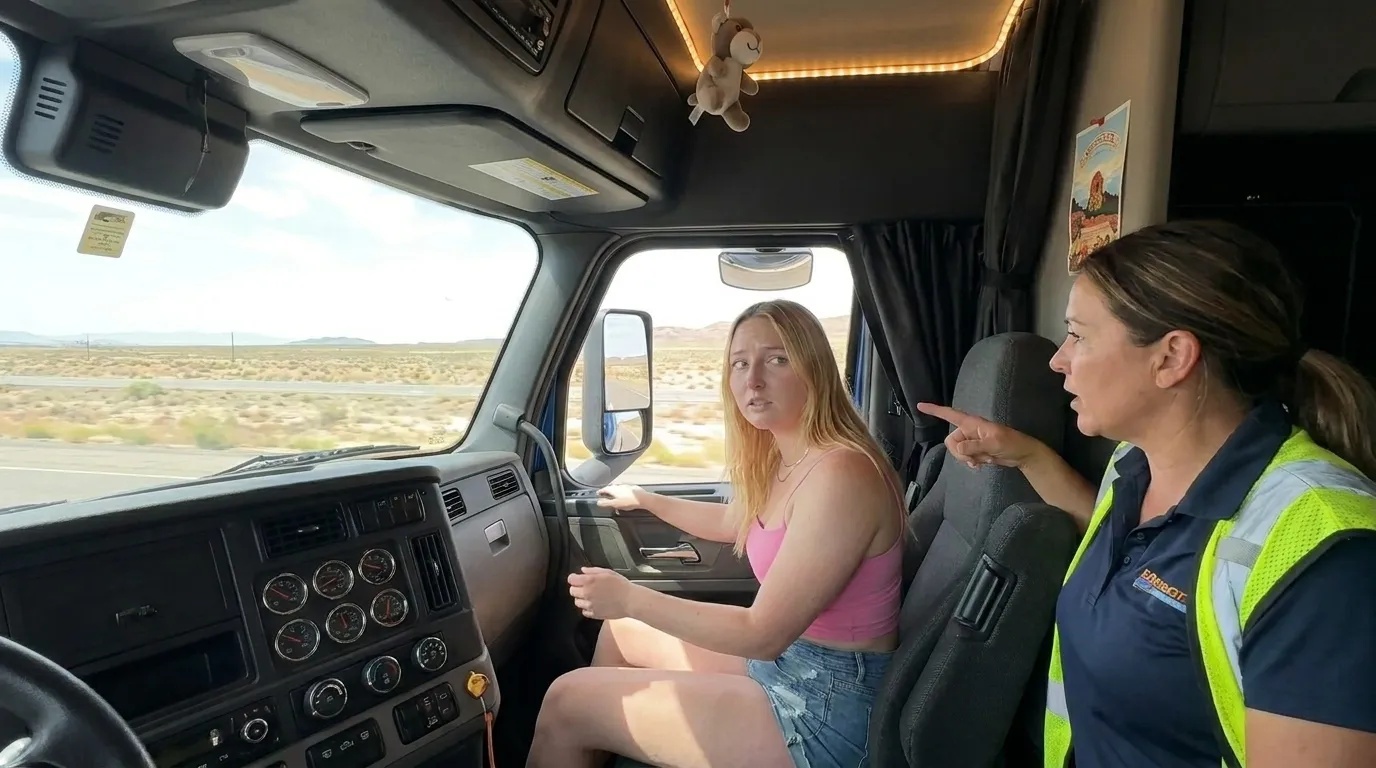
Range training covers the maneuvers you will be tested on during your skills exam: straight-line backing, offset backing, parallel parking, alley docking, and coupling and uncoupling a trailer.
These maneuvers feel impossible at first. Backing a 53-foot trailer in a straight line while looking only in your mirrors is genuinely disorienting for the first several days. Then something clicks. I remember the exact afternoon it clicked for me — a Tuesday, week three, when I backed into an alley dock on my second try and my instructor said nothing at all. That silence was the best feedback I ever received.
Road training teaches you how to manage shifting, braking distances, intersection clearances, railroad crossings, and highway driving in a vehicle that weighs up to 80,000 pounds when loaded. The physics of a loaded semi are nothing like any vehicle you have driven before. Stopping distances alone will fundamentally change how you think about following distance forever.
Step 4: Pass Your CDL Skills Test
The CDL skills test has three parts, administered by a state-certified examiner:
- Pre-trip vehicle inspection: You must walk around the vehicle and verbally identify and explain the function of dozens of components. This section is heavily memorization-based and is where unprepared candidates fail most often.
- Basic vehicle control: The range maneuvers — backing, parking, and coupling — performed in a controlled environment.
- On-road driving: A real-world driving evaluation covering turns, lane changes, intersections, railroad crossings, and highway driving.
I passed all three sections on my first attempt. The pre-trip inspection was the closest call — I blanked on the name of one component during the walk-around and had to recover without losing my composure. Practice your pre-trip inspection out loud, in sequence, every single day of your training. It sounds tedious. It saved me.
What CDL Training Actually Costs — The Full Picture
Every conversation about CDL training eventually comes down to money, and I want to give you a complete picture rather than just the tuition headline number.
- CLP application and knowledge tests: $50 – $200 depending on your state
- DOT physical exam: $75 – $150
- CDL training tuition: $0 – $10,000 depending on path chosen
- CDL skills test fee: $50 – $250 depending on your state
- Study materials and practice tests: $0 – $100
- Lost income during training: This is the cost nobody mentions, and for many people it is the biggest one
I was out of work for eight weeks during training. At my previous salary, that was roughly $7,500 in lost income on top of my $6,800 tuition. My total investment in getting my CDL was closer to $15,000 when everything was counted. I covered it with savings and a small personal loan that I paid off in my first seven months of driving.
Was it worth it? My first full year of driving, I earned $72,000. My second year, $81,000. My third year, running under my own authority, just over $94,000 gross. You do the math.
CDL Endorsements That Increase Your Earning Power
Your base CDL gets you on the road. Endorsements get you paid more. After passing your initial CDL skills test, you can add endorsements by passing additional written knowledge tests and, for some endorsements, additional skills tests.
- Hazardous Materials (H): Required for transporting federally regulated hazardous materials. Requires a TSA background check and fingerprinting in addition to a knowledge test. Adds significant earning potential.
- Tank Vehicle (N): Required for operating vehicles designed to transport liquids or gases in bulk. Common in fuel transport and chemical hauling.
- Doubles and Triples (T): Allows operation of double and triple trailer combinations where permitted by state law.
- Passenger (P): Required for operating vehicles designed to transport 16 or more passengers.
- School Bus (S): Required specifically for school bus operation.
I added my Hazmat and Tank endorsements in my second year. Combined, they opened up fuel transport contracts in my region that paid significantly better per mile than the dry freight lanes I started on. If you are planning to eventually go independent, start thinking about endorsements from day one.
What the First Year of Driving Actually Looks Like
Training gets you the license. Experience makes you a driver. Most carriers require new CDL holders to run with a more experienced driver for a period of time before going solo. This is called team driving or a mentorship period, and it is genuinely valuable even when it is frustrating.
My first solo dispatch was a dry van load from Nashville to Jacksonville, Florida. I had been trained, tested, certified, and mentored. I still pulled over at a rest area outside Chattanooga just to sit quietly for ten minutes and remind myself that I knew what I was doing.
The first year is about building your driving record, learning how to manage hours of service regulations in real conditions, developing relationships with dispatchers, and figuring out which lanes and freight types work best for your goals. Be patient with yourself during this period. Every experienced driver you admire was once a nervous first-year driver pulling over outside Chattanooga.
Is a CDL Worth It in 2026
The driver shortage in the United States is real, documented, and ongoing. The American Trucking Associations has reported a shortage of tens of thousands of drivers, a number expected to grow as a large portion of the current driver workforce approaches retirement age. That shortage translates directly into opportunity for anyone willing to go through the process of getting properly trained and licensed.
Entry-level CDL drivers start at $45,000 to $55,000 per year with most major carriers. Experienced drivers regularly earn $70,000 to $90,000. Owner-operators who manage their business well can earn well into six figures. The career is physically demanding and requires time away from home, and those realities are not right for everyone. But for someone who values independence, tangible skill, a clear income ceiling that keeps moving upward, and the particular freedom of covering ground for a living — there are very few career paths that deliver all of those things without a four-year degree and significant student loan debt.
I earned my CDL at 26 with no background in trucking, no family connections in the industry, and no guarantee that any of it would work out. It worked out. Not because I was exceptional, but because I prepared carefully, chose my training program thoughtfully, took the process seriously, and kept showing up even when backing a trailer in week two felt completely hopeless.
The road is hard. It is also very, very worth it.
Rachel Monroe is a Class A CDL holder and independent owner-operator based in Nashville, Tennessee. She writes about CDL training, life on the road, and the business of running a one-truck operation. She has driven over 340,000 miles in three years and is still learning something new on every run.
ENJOY TRUCKING WITH ME?


Hotshot Trucking Insurance: What It Really Costs, What You Actually Need, and How I Help Fellow Operators Stop Paying Too Much

Commercial Auto Insurance Quotes: How I Stopped Guessing and Started Comparing — A Complete Guide for Owner-Operators in 2026

Bobtail Insurance: What It Costs, What It Covers, and Why Skipping It Was Almost the Biggest Mistake of My Trucking Career

Will AI Replace Truck Drivers? Here Is What the Data Actually Says in 2026
