Finance
Bobtail Insurance: What It Costs, What It Covers, and Why Skipping It Was Almost the Biggest Mistake of My Trucking Career

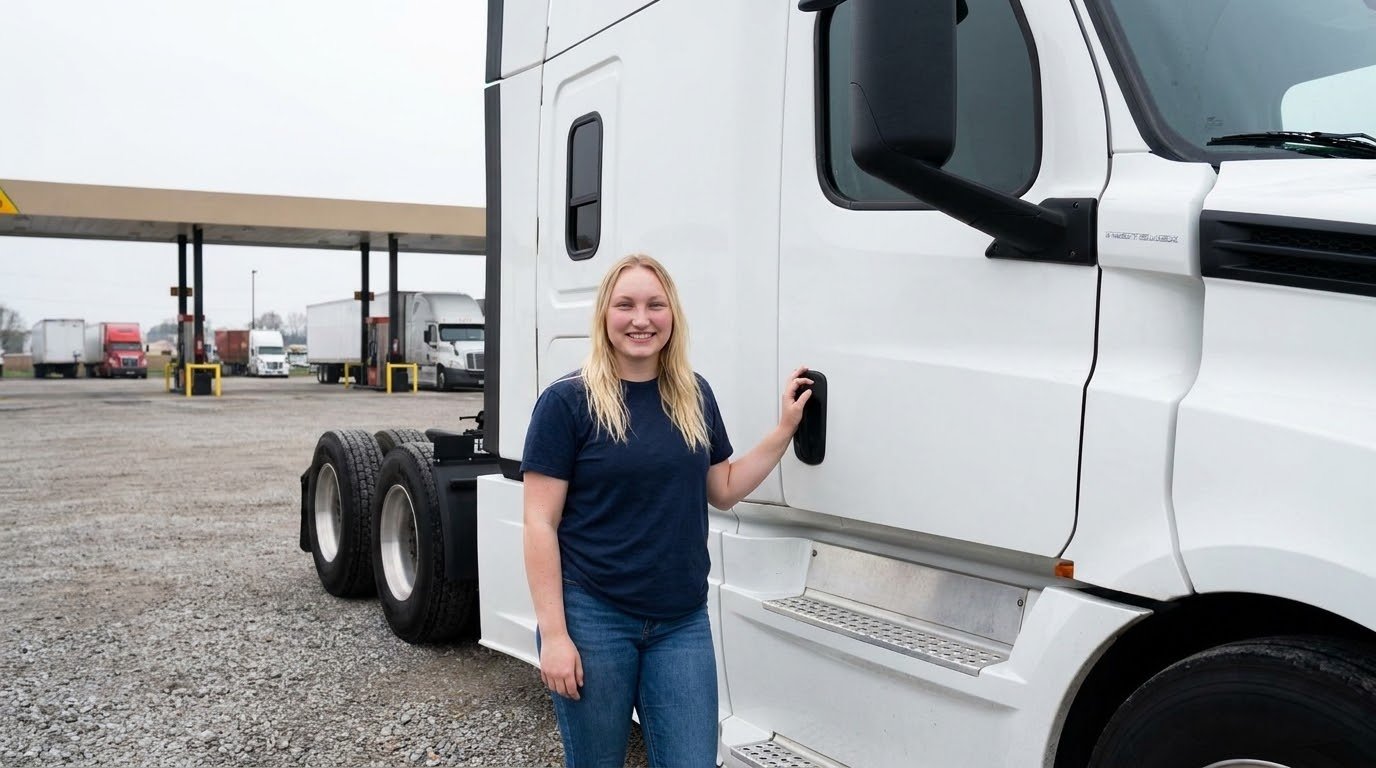
I almost skipped bobtail insurance entirely. Not because I did not know it existed. My broker had mentioned it during our first conversation when I was setting up coverage for my 2019 Freightliner Cascadia. But when I was staring at a first-year insurance package that was already pushing $18,000 annually, every line item started looking like something I could potentially live without.
Bobtail insurance was $680 for the year. I remember thinking — that is $680 I could put toward fuel, toward my truck payment, toward literally anything else in a budget that was already stretched thin in my first months running under a carrier lease out of Columbus, Ohio.
My broker spent about eight minutes walking me through exactly what happens to an owner-operator who drives without bobtail coverage and has an accident during that window. By minute four I had stopped looking for ways to cut that line item. By minute eight I was grateful he had not just let me remove it and move on.
Three years later, I have never filed a bobtail claim. I hope I never do. But I understand exactly what that $680 — now closer to $720 at my current renewal — is protecting me from. And I have watched other drivers learn that lesson the hard way, which is a much more expensive education.
This article is everything I know about bobtail insurance — what it is, what it covers, what it costs, who needs it, and how it fits into the broader commercial trucking insurance picture that every owner-operator needs to understand before they put a single mile on their truck.
What Is Bobtail Insurance
Bobtail insurance is a commercial liability policy that covers your semi-truck when you are operating it without a trailer attached and you are not currently under dispatch from a motor carrier.
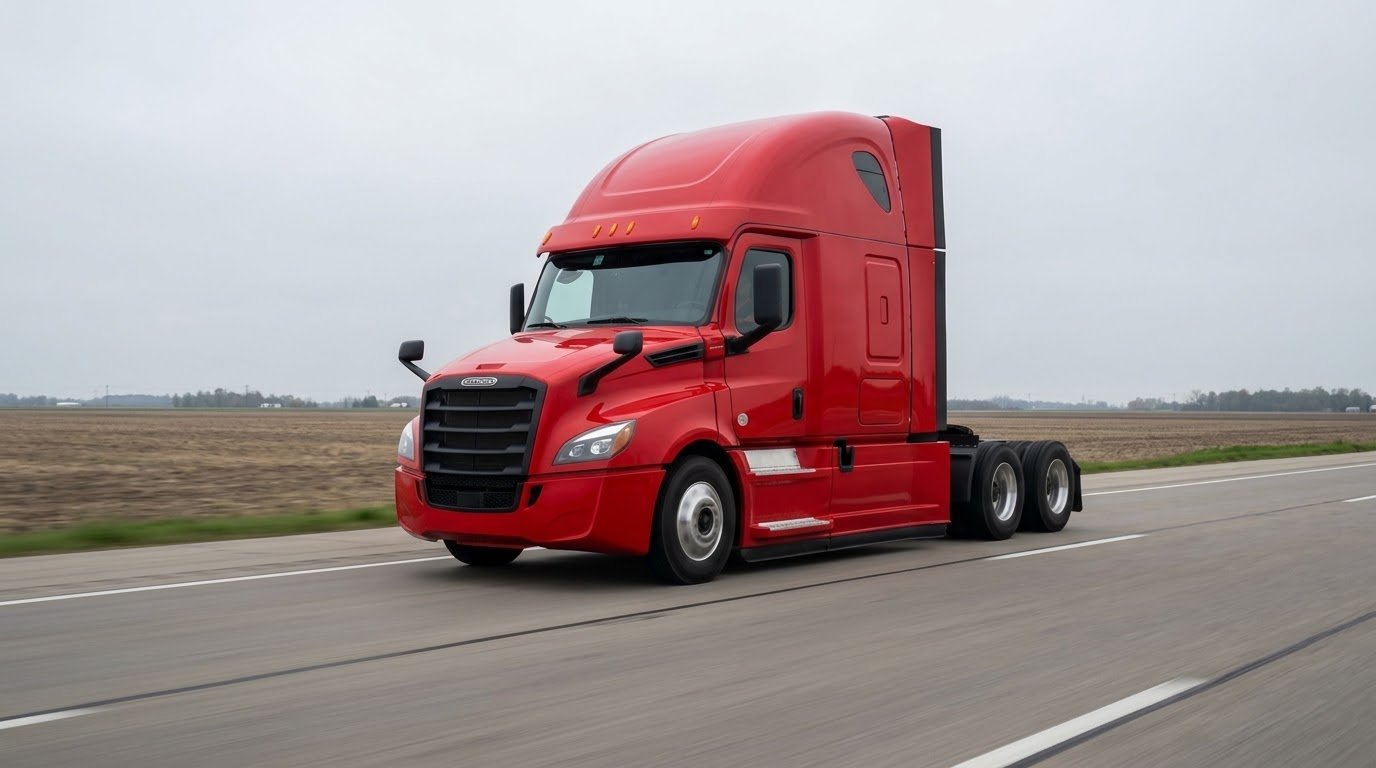
The name comes from the visual — a semi-truck cab driving without a trailer attached is called bobtailing. If you have spent any time around trucking, you have seen it. The tractor alone, moving down the highway without anything behind it. That is a bobtail configuration, and in most owner-operator scenarios, that truck is operating in a coverage gap that many drivers do not realize exists until it is too late.
To understand why that gap exists, you need to understand how liability coverage is structured for leased owner-operators specifically.
When you are leased to a motor carrier and operating under their DOT authority, their primary liability policy covers you while you are under their dispatch — meaning while you are actively hauling their freight or operating in direct service of a load they have assigned to you. The moment that dispatch relationship ends — when you drop the trailer, complete the delivery, and are now driving your truck for any purpose outside of that carrier’s active dispatch — their liability coverage no longer applies to you.
That gap is exactly what bobtail insurance fills.
Bobtail Insurance vs Non-Trucking Liability — Understanding the Difference
This is the single most common point of confusion I see in trucking communities, and it is important enough to address directly before going any further.
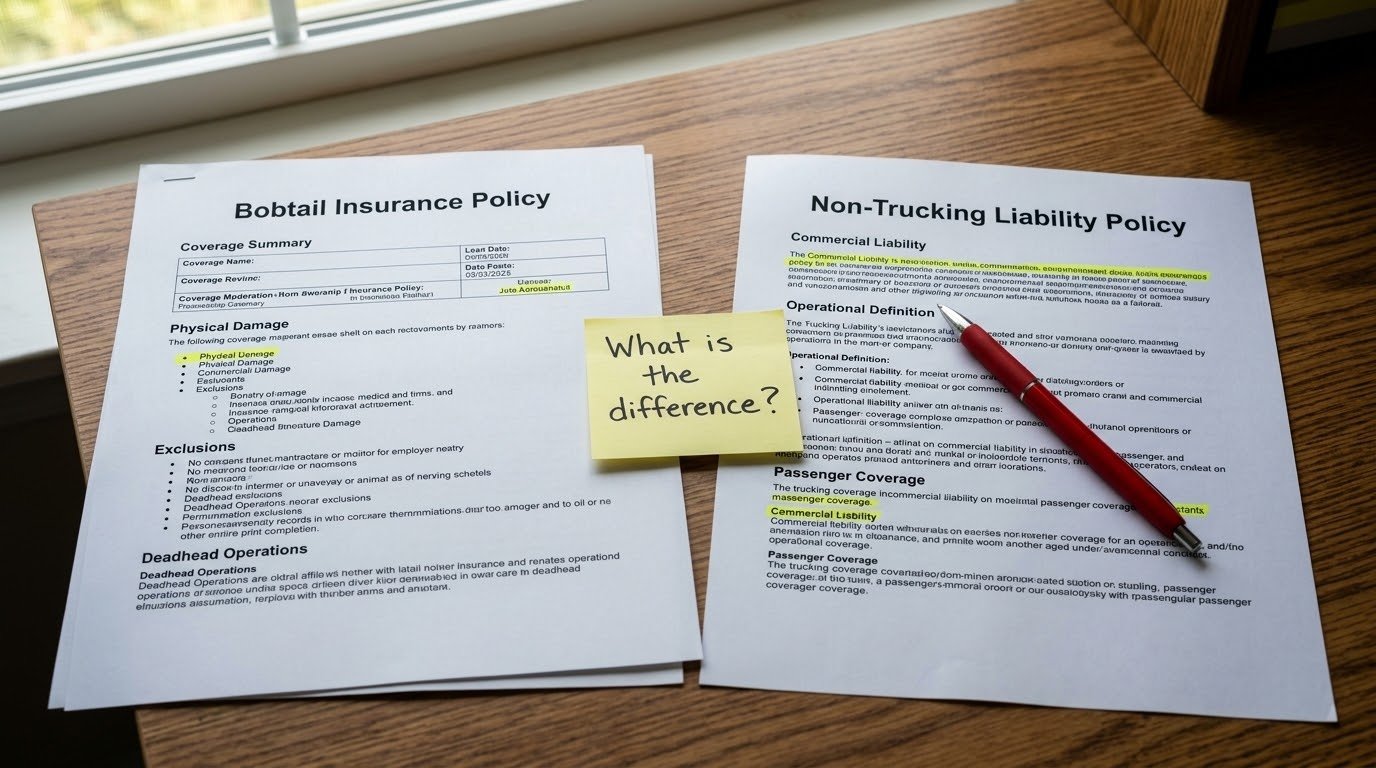
Bobtail insurance and non-trucking liability insurance are frequently used interchangeably, including by some brokers. They are related but technically distinct coverages, and understanding the difference matters for making sure you have the right protection.
| Coverage Type | What It Covers | Key Distinction |
|---|---|---|
| Bobtail Insurance | Liability when driving tractor without trailer, regardless of dispatch status | Covers both under dispatch and off dispatch — broader interpretation |
| Non-Trucking Liability (NTL) | Liability when using truck for personal, non-business purposes outside of carrier dispatch | Specifically covers personal use only — does not cover business use outside dispatch |
In practical terms, bobtail insurance is generally the broader of the two coverages. Non-trucking liability is more specifically limited to personal use scenarios — driving your truck to a repair shop on your own time, running a personal errand between loads, driving home after dropping a trailer.
Some insurers use the terms interchangeably and offer a combined product. Others distinguish them clearly and price them separately. When you are shopping coverage, ask your broker specifically which scenarios are covered and which are excluded under whatever product they are recommending. Do not assume terminology means the same thing across every policy.
In my own coverage, I carry what my broker describes as non-trucking liability with bobtail provisions — a combined product that covers me both during personal use and during the gap period between dispatch assignments when I am moving my tractor without a trailer for business-related purposes. That combined product costs me approximately $720 annually and covers the scenarios that matter most in my operation.
Who Needs Bobtail Insurance
The answer to this question depends almost entirely on how you are operating your truck. Here is a clear breakdown:
| Operator Type | Need Bobtail Insurance? | Reason |
|---|---|---|
| Owner-operator leased to carrier | Yes — strongly recommended | Carrier policy covers under dispatch only. Gap exists when bobtailing off dispatch. |
| Owner-operator under own authority | Yes — but through different coverage | Own primary liability policy covers while under dispatch. Non-trucking liability covers personal use gaps. |
| Company driver (does not own truck) | No | Carrier’s policy covers all operation of company equipment. |
| Fleet owner (trucks leased to drivers) | Situational | Depends on lease structure and whether drivers carry individual coverage. |
The owner-operator leased to a carrier is the classic bobtail insurance customer. This is the driver who owns their own truck, operates under a carrier’s authority and dispatch system, and therefore falls into the coverage gap every single time they drop a trailer and move their truck without being actively dispatched.
Consider how often that actually happens in a typical week of trucking operations. You drop a loaded trailer at a receiver. You drive your bobtail tractor to a nearby truck stop to fuel and rest before your next dispatch. You drive from a drop location to a pickup location without a trailer because the logistics do not require you to move an empty. You drive your truck to a repair facility for scheduled maintenance. You drive home on a weekend reset.
Every one of those scenarios — common, routine, happening multiple times per week for most leased owner-operators — involves operating your truck in the bobtail configuration outside of active carrier dispatch. Without bobtail coverage, every one of those miles is uninsured for liability.
What Bobtail Insurance Actually Covers
Bobtail insurance is a liability policy. It is critical to understand what that means and what it does not include.
What bobtail insurance covers:
- Bodily injury liability: Medical expenses, lost wages, and pain and suffering for other people injured in an accident where you are at fault while bobtailing
- Property damage liability: Repair or replacement costs for other vehicles, structures, or property damaged in an accident where you are at fault while bobtailing
- Legal defense costs: Attorney fees and court costs if you are sued as a result of a bobtail accident
What bobtail insurance does NOT cover:
- Your own truck: Bobtail insurance is liability only — it does not pay for damage to your tractor. That is what physical damage coverage is for.
- Cargo: You are not hauling freight when bobtailing, so cargo coverage is not relevant — but make sure your cargo policy is clear on this point
- Medical expenses for yourself: Occupational accident insurance covers your own injuries — bobtail insurance covers other people
- Operation under active carrier dispatch: Once you are under dispatch, the carrier’s primary liability applies — bobtail coverage is specifically for the gap outside that dispatch relationship
Understanding this coverage structure helped me see bobtail insurance for what it is: a relatively inexpensive liability net for a very specific and very real exposure window. It does not replace your other coverages. It fills the gap between them.
What Does Bobtail Insurance Cost
Bobtail insurance is one of the more affordable components of a complete owner-operator insurance package. Here are realistic 2025 market ranges:
| Driver Profile | Annual Premium Range | Monthly Estimate |
|---|---|---|
| New CDL holder, clean record | $600 — $1,200 | $50 — $100 |
| Experienced driver (3+ years), clean record | $400 — $800 | $33 — $67 |
| Driver with minor violations | $800 — $1,500 | $67 — $125 |
| Driver with major violations or prior claims | $1,200 — $2,500+ | $100 — $208+ |
| Combined bobtail and non-trucking liability | $600 — $1,400 | $50 — $117 |
Several factors influence where your bobtail premium lands within these ranges. Your CDL experience level matters — new drivers pay more than veterans. Your Motor Vehicle Record is evaluated — violations increase your rate. Your garaging location and operating states affect pricing. And the liability limits you choose on your bobtail policy directly affect the premium.
Most bobtail policies are written at $1,000,000 in liability limits, which aligns with the standard requirement most carriers and shippers use for primary coverage. Some drivers carry lower limits on their bobtail policy to reduce premium, but I would encourage anyone considering that approach to think carefully about the gap they are creating. A serious accident while bobtailing — one involving significant injuries or multiple vehicles — can easily exceed lower liability limits and leave you personally exposed for the difference.
Real Scenarios Where Bobtail Insurance Matters
Abstract coverage explanations are useful. Real scenarios are more useful. Here are situations where bobtail insurance directly determines whether an owner-operator is protected or personally liable:
Scenario 1: The Fuel Stop Between Loads
You drop a loaded trailer at a distribution center outside Columbus at 3 PM. Your next dispatch does not pick up until 8 AM the following morning in Cincinnati. You drive your bobtail tractor to a nearby truck stop, fuel up, and while pulling back onto the access road you clip a passenger vehicle making a left turn. The other driver sustains a whiplash injury and their vehicle needs $8,000 in repairs.
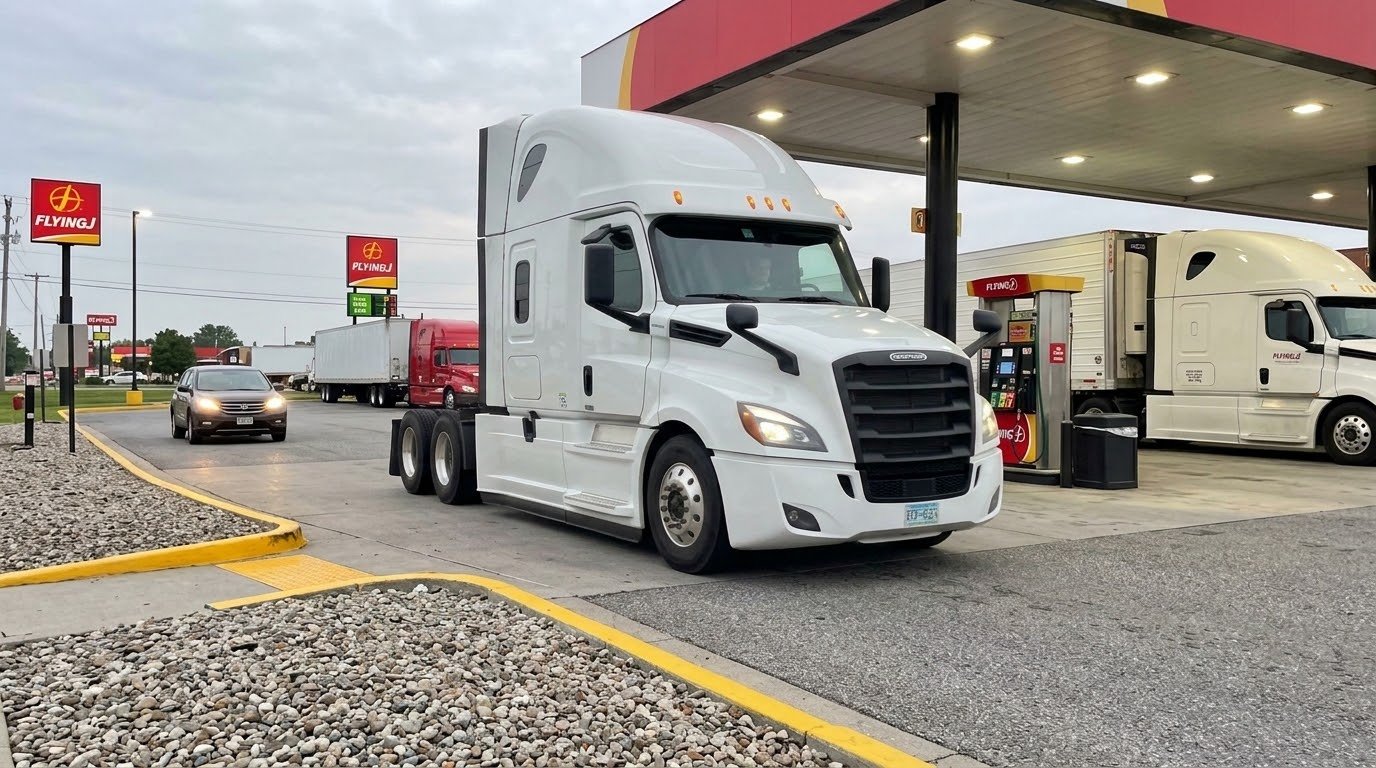
Without bobtail coverage: You are personally liable for the other driver’s medical expenses and vehicle repairs. The carrier’s policy does not apply — you were not under dispatch. Your primary liability (if you have your own authority) may not apply — you were operating as a leased driver under the carrier’s authority structure.
With bobtail coverage: Your bobtail policy responds to the claim, covers the other driver’s expenses up to your policy limits, and provides legal defense if the other driver pursues litigation.
Scenario 2: The Maintenance Run
Your truck is due for a scheduled oil change and tire rotation. You drive your bobtail tractor to a diesel repair shop fifteen miles from your home base. On the way, you rear-end a pickup truck at a stoplight. The pickup driver and his passenger both sustain injuries requiring emergency room visits totaling $34,000.
Without bobtail coverage: Personal liability exposure of $34,000 in medical costs plus potential lawsuit for pain and suffering, lost wages, and long-term care — all coming directly out of your personal assets.
With bobtail coverage: Policy responds, covers the claim up to limits, and handles legal defense costs.
Scenario 3: The Weekend Reset
You complete a delivery Friday afternoon, drop the trailer at a carrier yard, and drive your bobtail truck home for a 34-hour reset. Saturday morning, while backing your truck into your driveway, you misjudge the turn and take out a section of your neighbor’s fence and their parked car.
Without coverage: Property damage comes out of your pocket or your personal auto policy — which almost certainly excludes a commercial semi-truck from its coverage.
With non-trucking liability or combined bobtail coverage: Policy responds to the property damage claim.
How Bobtail Insurance Fits Into Your Complete Coverage Package
No single coverage protects you completely. Bobtail insurance works as part of a coordinated package of coverages that together eliminate the gaps in your protection as an owner-operator.

Here is how a complete leased owner-operator coverage package looks with bobtail insurance properly included:
- Carrier’s primary liability: Covers you while actively under carrier dispatch hauling their freight — this is the carrier’s responsibility, not yours to purchase
- Bobtail / Non-trucking liability: Covers the gap when you are operating your truck outside of active dispatch — this is your responsibility as the equipment owner
- Physical damage: Covers your truck itself for collision, theft, fire, and weather — always your responsibility as the equipment owner regardless of dispatch status
- Motor truck cargo: Covers the freight you haul — verify whether your carrier’s policy includes this or whether you need your own
- Occupational accident: Covers your own injuries since you are likely classified as an independent contractor without workers compensation coverage
The total annual cost of this package for a leased owner-operator with a clean record typically runs between $6,000 and $12,000 depending on truck value, experience level, and location. Bobtail or non-trucking liability represents a small fraction of that total — but without it, the entire package has a gap that could result in catastrophic personal financial exposure.
Common Mistakes Owner-Operators Make With Bobtail Coverage
Three years of operating and two years of writing about trucking insurance has shown me the same mistakes made repeatedly. All of them are avoidable.
- Assuming the carrier’s policy covers bobtail operation. It does not. This is the foundational misunderstanding that leaves drivers unprotected. Verify your carrier’s policy scope in writing before assuming coverage extends beyond active dispatch.
- Confusing bobtail insurance with physical damage coverage. Bobtail covers your liability to others. It does not pay for repairs to your own truck. If you bobtail into a guardrail, your bobtail policy pays nothing toward your truck repair — that is what physical damage coverage handles.
- Buying the minimum limits to save on premium. The cost difference between $500,000 and $1,000,000 in bobtail liability limits is typically $100 to $200 annually. A single serious injury accident can easily exceed $500,000 in total damages. The premium savings are not worth the exposure gap.
- Not verifying coverage language around dispatch status. Some non-trucking liability policies have very specific language defining what constitutes personal use versus business use. Make sure the scenarios where you actually drive without a trailer are clearly covered under the policy language — not just assumed to be covered.
- Letting bobtail coverage lapse during slow periods. Some drivers drop non-essential coverages during low-revenue periods. Bobtail insurance is not a coverage you can safely drop and reinstate based on cash flow. A single uninsured incident during a lapse period can have financial consequences that far exceed the annual premium.
Questions to Ask Your Broker About Bobtail Insurance
Before adding bobtail or non-trucking liability coverage to your package, get clear answers to these specific questions:
- Does this policy cover me when I am driving my tractor between dispatch assignments for business purposes, or only during personal use?
- What is the exact definition of “under dispatch” in this policy, and how does it determine when bobtail coverage applies versus the carrier’s primary policy?
- Does this policy coordinate with my carrier’s primary liability or does it create a gap between the two?
- What liability limits are available and what is the premium difference between the options?
- Are there any state-specific exclusions or limitations I should be aware of given my operating territory?
The Bottom Line on Bobtail Insurance
Bobtail insurance costs most owner-operators between $400 and $1,200 per year. That is roughly $1 to $3 per day of protection against personal liability exposure that, in a serious accident scenario, could reach hundreds of thousands of dollars.

The math is straightforward. The logic is clear. And yet drivers skip this coverage regularly — usually because they do not fully understand the gap it fills until they are standing on the side of the road trying to explain to a claims adjuster why their carrier’s policy does not apply to what just happened.
I came within one conversation of being one of those drivers. My broker’s eight-minute explanation of the bobtail coverage gap changed that outcome. I hope this article does the same for anyone reading it before they make that mistake instead of after.
Cover the gap. The premium is small. The exposure it protects against is not.
ENJOY TRUCKING WITH ME?


Hotshot Trucking Insurance: What It Really Costs, What You Actually Need, and How I Help Fellow Operators Stop Paying Too Much

Commercial Auto Insurance Quotes: How I Stopped Guessing and Started Comparing — A Complete Guide for Owner-Operators in 2026

Bobtail Insurance: What It Costs, What It Covers, and Why Skipping It Was Almost the Biggest Mistake of My Trucking Career

Will AI Replace Truck Drivers? Here Is What the Data Actually Says in 2026
