Finance
Trucking Insurance Quotes: How I Compared 11 Quotes Before Finding the Right Coverage — and What Every Owner-Operator Must Know First


The first trucking insurance quote I ever received was $26,400 annually. The last one — for the same truck, same routes, same freight — was $17,800. Same year. Same week. Eleven quotes total. Nearly a $9,000 difference between the highest and the lowest number sitting in my inbox at the same time.
That experience taught me something nobody in the trucking industry had told me before: trucking insurance quotes are not a fixed price. They are a negotiation. And the drivers who understand that walk away paying thousands less every single year.
I am Stella Brown, an independent owner-operator based in Columbus, Ohio. I have been running dry freight under my own authority for three years. In that time, I have collected, compared, and analyzed more trucking insurance quotes than most drivers see in a decade.
This article is everything I learned — written plainly, with real numbers, for anyone who is serious about getting the right coverage at the right price.
Why Trucking Insurance Quotes Vary So Dramatically
Most drivers assume that insurance pricing is standardized. It is not.
Every commercial trucking insurer has its own underwriting guidelines, its own risk appetite, and its own formula for calculating premium. One carrier might price new CDL holders conservatively because of bad loss history in that segment.
Another might specialize in new authorities and price them more competitively. A third might offer aggressive rates for dry van freight but decline refrigerated loads entirely.
The result is that identical drivers with identical trucks hauling identical freight can receive quotes that differ by $5,000 to $10,000 annually depending entirely on which carriers they approach and how their application is presented.
This is why shopping trucking insurance quotes is not optional. It is one of the highest-value financial tasks you will perform all year as an owner-operator.
What Information You Need Before Requesting Quotes
Walking into a quote request unprepared wastes time and produces inaccurate numbers. Every broker or carrier you approach will need the same core information. Having it organized before you start speeds up the process and ensures the quotes you receive are actually comparable.
- Your CDL number and state of issuance
- Complete Motor Vehicle Record — most brokers pull this themselves but having it ready helps
- USDOT and MC numbers if you are operating under your own authority
- Vehicle information: year, make, model, VIN, and current market value of your truck
- Radius of operation: local, regional, or long-haul, and primary states traveled
- Primary commodity hauled and average cargo value per load
- Prior insurance history: current carrier, current limits, and any claims in the past three to five years
- Garaging address where your truck is kept when not in use
- List of all drivers who will operate the vehicle, with CDL numbers and MVRs for each
When I pulled my first round of quotes, I was missing my garaging zip code and an accurate current market value for my truck. Two brokers had to follow up for that information, which delayed their quotes by three days. Small thing, but in trucking, time is money.
Where to Get Trucking Insurance Quotes
There are three main channels for getting trucking insurance quotes, and each has real advantages and real drawbacks.
| Quote Source | Advantages | Drawbacks | Best For |
|---|---|---|---|
| Independent Broker | Shops multiple carriers at once, advocates for you, explains coverage differences | Quality varies significantly by broker experience | Most owner-operators, especially new authorities |
| Direct Carrier | No broker middleman, sometimes lower cost on simple risks | Only shows you their own rates, no comparison shopping | Experienced drivers with straightforward risk profiles |
| Online Quote Platforms | Fast, convenient, available 24 hours | Often produce ballpark estimates rather than bindable quotes, limited to partnered carriers | Initial research and ballpark budgeting only |
My strong recommendation — based on personal experience — is to work with an independent broker as your primary quote source.
A good independent broker has relationships with 10 to 20 commercial trucking carriers and can present your risk profile to all of them with a single application. That is the equivalent of getting 10 to 20 individual quotes without making 10 to 20 separate phone calls.
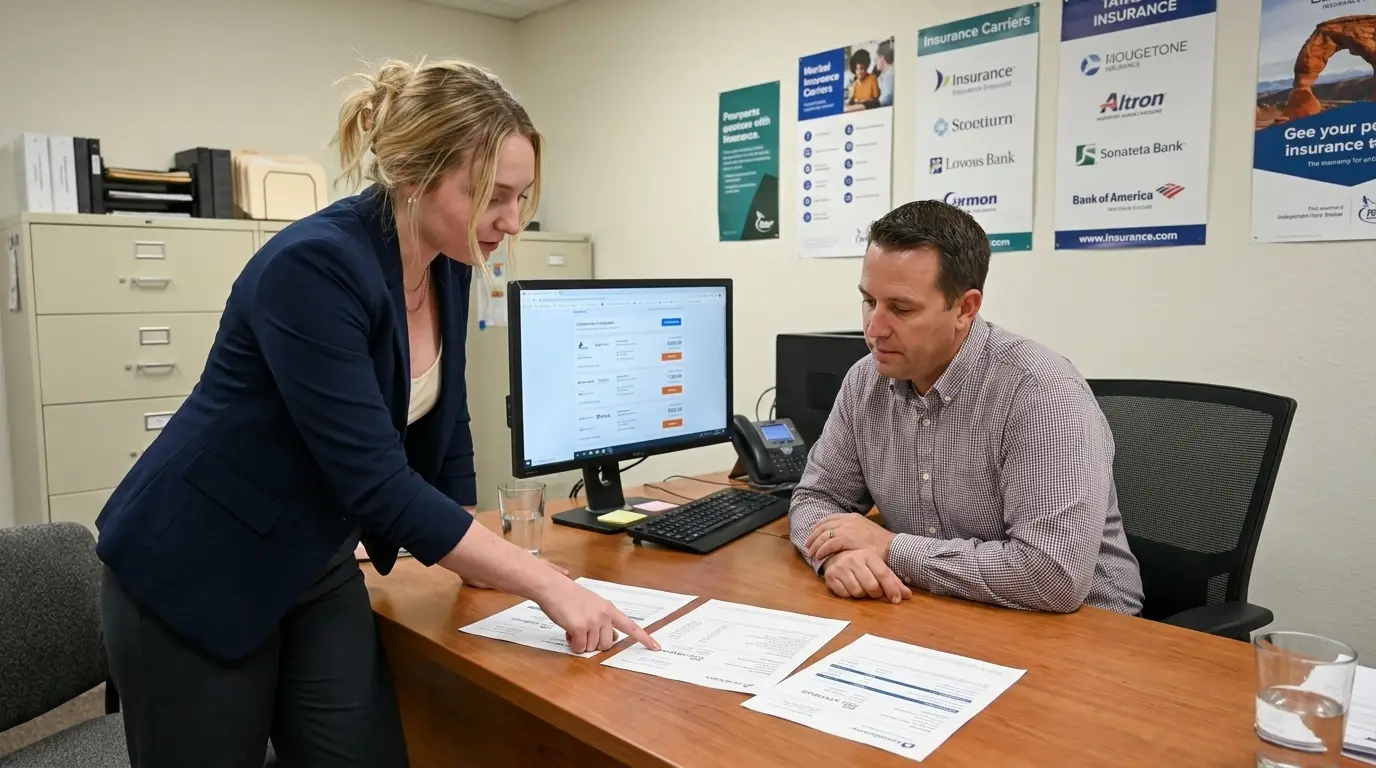
In my second year, I switched from the captive agent I had used in year one to an independent broker in Columbus. My renewal came in $2,400 lower for slightly broader coverage. That broker paid for himself many times over.
The Coverage Types Included in a Trucking Insurance Quote
A complete trucking insurance quote is not a single number. It is a package of individual coverages, each priced separately. Understanding what each line item covers helps you compare quotes accurately rather than just comparing total premium numbers.
| Coverage | What It Covers | 2025 Annual Range |
|---|---|---|
| Primary Auto Liability | Bodily injury and property damage to others when at fault | $9,000 — $16,000 |
| Physical Damage | Your truck — collision, theft, fire, weather | $2,500 — $5,500 |
| Motor Truck Cargo | Freight you are hauling if lost or damaged | $1,200 — $3,000 |
| General Liability | Non-driving incidents — loading, unloading, premises | $500 — $1,500 |
| Non-Trucking Liability | Personal use of truck when not under dispatch | $400 — $900 |
| Uninsured Motorist | Protection when hit by uninsured or underinsured driver | $300 — $800 |
When comparing quotes from multiple brokers, never compare only the total number at the bottom of the page. Compare each line item individually. I once received two quotes that were $800 apart in total premium — but the cheaper quote had $500,000 less in cargo coverage limits. That is not a fair comparison. That is a coverage gap dressed up as a deal.
What Underwriters Look at When Pricing Your Quote
Every trucking insurance quote starts with an underwriter reviewing your risk profile. Understanding what they are looking for helps you present your application as favorably as possible — and helps you understand why your quotes are coming in at the numbers they are.
CDL Experience: The single most influential factor in your quote. Drivers under two years of CDL experience consistently receive the highest rates in the market. The experience discount that kicks in after two and three clean years is significant — often $3,000 to $5,000 annually on primary liability alone.
Loss History: Prior claims follow you. An at-fault accident within the past three years can increase your liability premium by 25 to 50 percent depending on severity. Multiple claims may push you out of the standard market entirely into surplus lines carriers where rates are substantially higher.
Motor Vehicle Record: Every violation — commercial and personal — affects your quote. Major violations like DUI, reckless driving, or leaving the scene of an accident can result in declination from standard carriers. Minor violations have smaller but still real pricing impacts.
Freight Type: General dry freight quotes the most favorably. Refrigerated loads, high-value electronics, hazardous materials, and oversized freight all carry premium increases on cargo coverage and sometimes on liability as well.
Operating Radius: Long-haul operations across multiple states are priced higher than regional or local operations. More miles and more geographic variability equals more exposure in the underwriter’s model.
Truck Age and Safety Equipment: Newer trucks with collision mitigation systems, automatic emergency braking, and lane departure technology can qualify for safety discounts. Older trucks without these features are priced less favorably on liability.
How to Compare Trucking Insurance Quotes Correctly
Most drivers compare quotes by looking at the total annual premium. That is the wrong approach.

Here is the correct way to compare trucking insurance quotes side by side:
- Compare liability limits, not just premiums. A quote showing $750,000 in primary liability is not comparable to one showing $1,000,000, even if the premium is lower. Most freight brokers require $1,000,000 minimum — make sure every quote you compare meets that threshold.
- Compare cargo coverage limits and exclusions. Check what commodity types are excluded, what the per-occurrence limit is, and what the deductible looks like on each quote.
- Compare deductibles across all coverages. A lower premium with a $10,000 physical damage deductible is a very different financial product than the same premium with a $2,500 deductible.
- Check the carrier’s A.M. Best financial strength rating. Only consider carriers rated A- or better. A financially weak carrier that cannot pay claims is worse than no coverage at all.
- Ask about mid-term endorsement flexibility. If your operations change during the policy year, you need a carrier that can adjust your coverage without requiring a full cancellation and rewrite.
I built a simple spreadsheet when I was comparing my eleven quotes. Carrier name, liability limit, cargo limit, physical damage deductible, general liability included or excluded, total premium, and A.M. Best rating. Laid out that way, the right choice was obvious within about ten minutes.
Red Flags in a Trucking Insurance Quote
Not every low quote is a good deal. Here are the warning signs I have learned to look for after three years of shopping coverage:
- Liability limits below $1,000,000. Meeting the federal minimum of $750,000 sounds compliant, but most shippers and brokers will not work with you at that level.
- Broad exclusions buried in the fine print. Some low-cost policies exclude certain states, certain freight types, or certain use cases that may apply directly to your operation.
- Carriers with no commercial trucking specialty. General commercial auto carriers sometimes write trucking policies but lack the claims expertise and underwriting depth of dedicated trucking insurers. This shows up in claim handling quality.
- Quotes that seem too low without explanation. If a quote is $4,000 below every other quote you received, ask specifically what is different about the coverage. The answer is usually in the exclusions or the limits.
- Pressure to bind coverage immediately. Legitimate brokers give you time to review. High-pressure tactics to sign quickly are a red flag regardless of the price.
How I Reduced My Trucking Insurance Quote at Renewal
Getting a good quote the first time is one challenge. Keeping your premiums from climbing at renewal is another. Here is what worked for me over three renewal cycles:
- Re-shopped every single renewal rather than accepting the automatic renewal quote. My insurer’s renewal quote in year two was $1,100 higher than what my broker found elsewhere for better coverage.
- Documented my safety record proactively. I provided my broker with my clean inspection reports and dashcam footage records at renewal time. That documentation supported a favorable risk narrative during underwriting.
- Paid annually instead of monthly. Eliminating monthly installment financing fees saved me approximately $1,800 to $2,100 per year.
- Adjusted physical damage coverage to reflect my truck’s actual depreciated market value rather than the original purchase price. That alone reduced my physical damage premium by $420 in year three.
- Asked directly what discounts I qualified for. My broker identified a safety equipment discount I had never been given that applied retroactively to my renewal. Nobody volunteered that information. I had to ask.
Questions to Ask Every Broker Before You Accept a Quote
The quality of your broker relationship directly affects the quality of your trucking insurance quote. Before accepting any quote, ask these questions and expect clear answers:
- How many carriers did you submit my application to, and which ones declined?
- What is the A.M. Best rating of the recommended carrier?
- What specific exclusions does this policy carry that I should know about?
- How will one at-fault claim affect my renewal premium?
- What discounts am I currently receiving, and what discounts might I qualify for next year?
- What is your claims support process if I have an accident on a weekend?
A broker who cannot answer these questions directly and specifically is not the right broker for your business. Your insurance is too important and too expensive to leave in the hands of someone who does not know your file.
The Bottom Line on Trucking Insurance Quotes
Shopping trucking insurance quotes is not a one-time task. It is an annual process that, done correctly, can save you thousands of dollars every year while ensuring your coverage actually protects your business when something goes wrong.
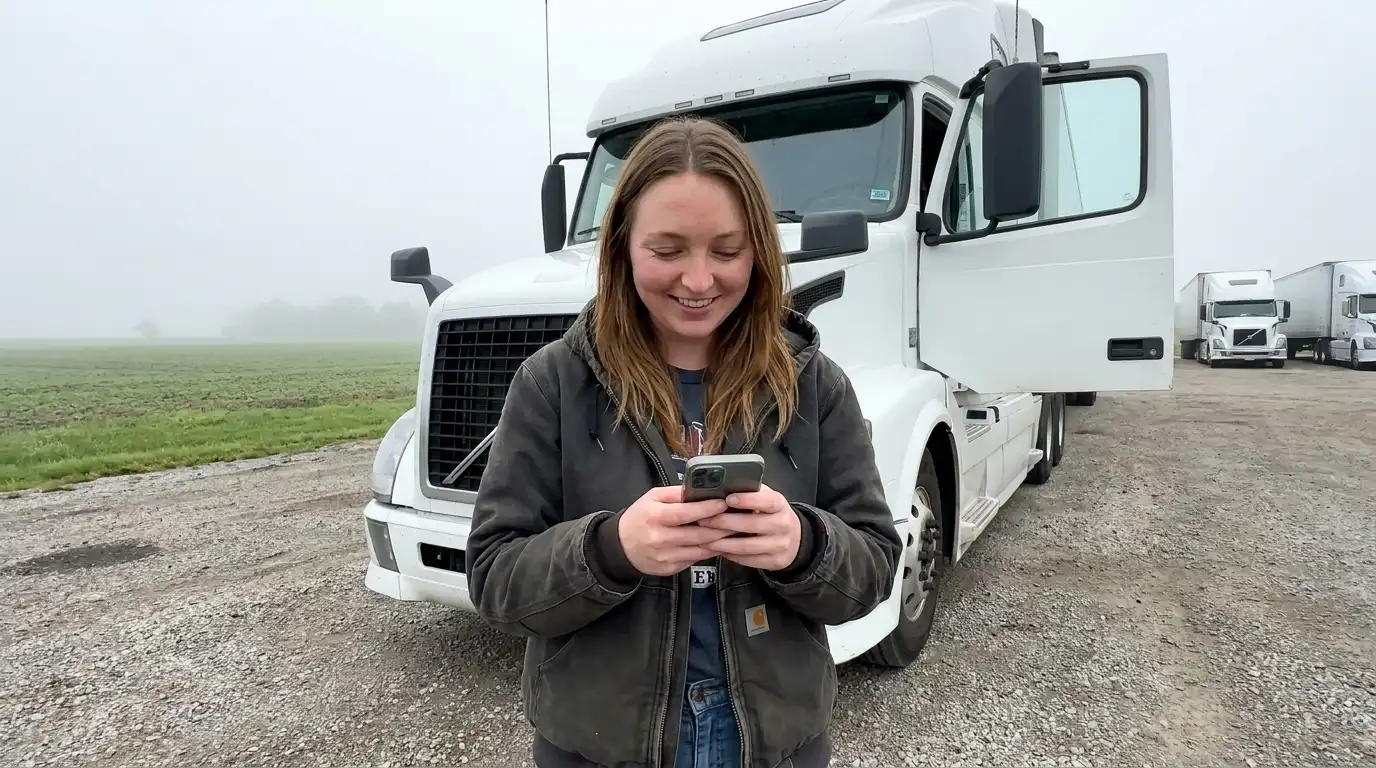
My eleven-quote process in year one was exhausting. It was also worth every hour I put into it. The $8,600 spread between my highest and lowest quotes that week was real money — money that stayed in my business instead of going to an insurer who happened to be the first one I called.
Get multiple quotes every year. Understand what you are comparing. Ask every question. And never let price alone drive a coverage decision on a business asset worth six figures and a livelihood worth far more than that.
Stella Brown is an independent owner-operator based in Columbus, Ohio, hauling dry freight across the Midwest and Southeast under her own authority. She writes about trucking insurance, owner-operator business strategy, and the financial realities of running a one-truck operation. Three years in, she re-shops her coverage every single renewal — and she always will.
ENJOY TRUCKING WITH ME?


Hotshot Trucking Insurance: What It Really Costs, What You Actually Need, and How I Help Fellow Operators Stop Paying Too Much

Commercial Auto Insurance Quotes: How I Stopped Guessing and Started Comparing — A Complete Guide for Owner-Operators in 2026

Bobtail Insurance: What It Costs, What It Covers, and Why Skipping It Was Almost the Biggest Mistake of My Trucking Career

Will AI Replace Truck Drivers? Here Is What the Data Actually Says in 2026
