Finance
Owner Operator Insurance: What It Really Costs, What You Actually Need, and What I Learned Running My Own Truck for Three Years

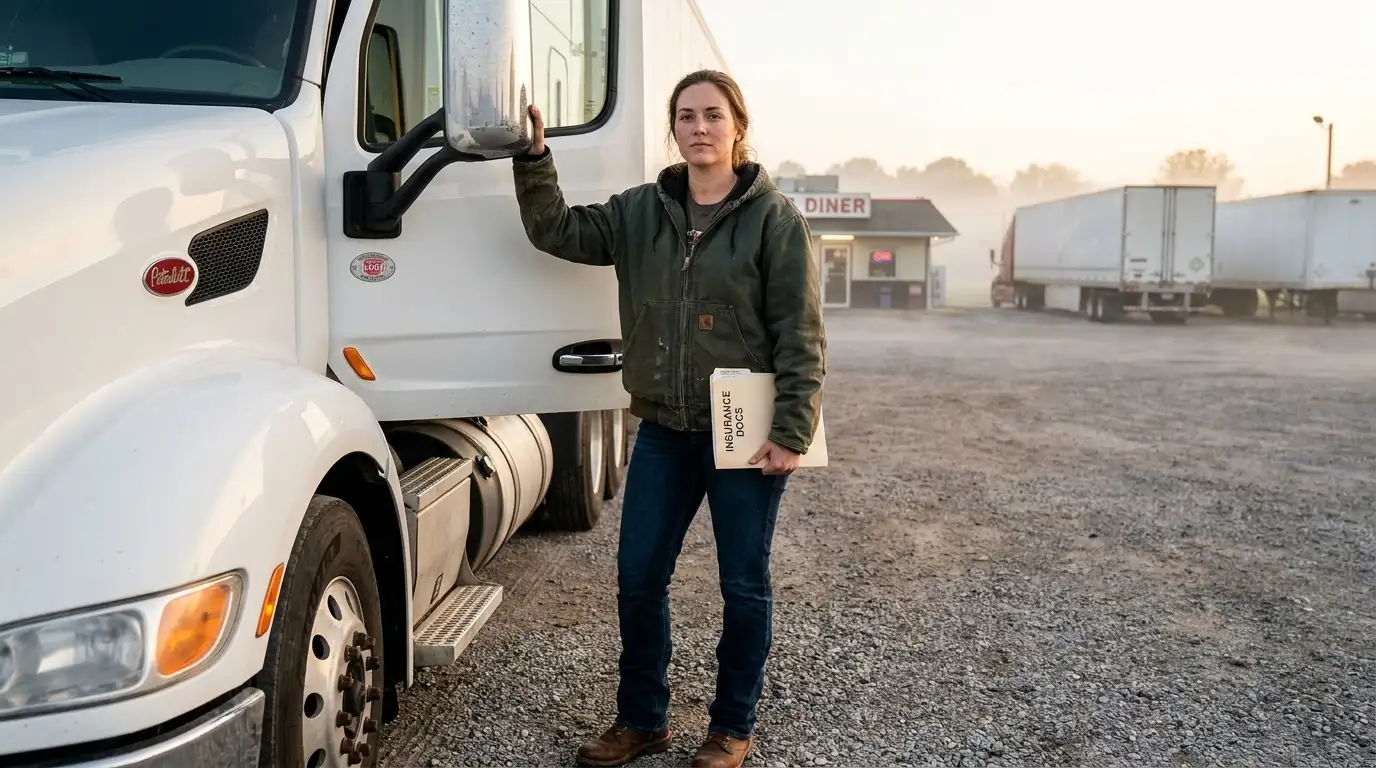
The day I got my own trucking authority number, I felt like I had finally made it. No more splitting miles with a carrier. No more waiting on someone else’s dispatch. Just me, my truck, my freight, and my decisions.
What nobody told me that day — or maybe what I was not ready to hear — was that getting your own authority also means getting your own insurance. All of it. At full market rates. With no carrier umbrella policy underneath you as a safety net.
I had been leased to a regional carrier for two years before going independent. During that time, I paid for bobtail coverage and cargo insurance on my own, but the carrier handled primary liability. The monthly cost was manageable.
Then I launched my own authority out of Knoxville, Tennessee, and my insurance broker sent me my first owner operator insurance quote as a fully independent operator.
It was $21,600 for the year.
I sat in my truck in the driveway for about twenty minutes before I called him back.
Three years later, I understand every line of that quote. I understand why it was that number, what I could have done differently to bring it lower, and exactly what coverage I needed versus what I was being oversold. This article is everything I know — written for anyone who is either running their own authority now or seriously thinking about making that move.
What Is Owner Operator Insurance and Why Is It Different
Owner operator insurance is not a single product. It is a customized package of commercial coverages designed specifically for independent truck drivers who own their equipment and operate under their own USDOT and MC numbers.
The key difference between owner operator insurance and the coverage a company driver or leased operator carries is simple: when you have your own authority, you are the carrier. That means the full weight of federal insurance requirements lands directly on you, with no company policy to fall back on.
The Federal Motor Carrier Safety Administration requires all for-hire motor carriers operating in interstate commerce to maintain minimum liability coverage before they can legally haul a single load.
For general freight carriers, that federal minimum is $750,000 in primary liability. For carriers hauling hazardous materials, the requirement jumps to $1,000,000 or $5,000,000 depending on the specific commodity being transported.
These are minimums. In reality, most freight brokers and shippers require carriers to carry $1,000,000 in primary liability as a standard contractual condition before they will assign a load.
If your certificate of insurance does not show at least $1,000,000, you will be locked out of a significant portion of the available freight market before you ever dispatch your first load under your own authority.
The Complete Owner Operator Insurance Package — What You Need and What It Costs
Here is the full breakdown of what a properly structured owner operator insurance package looks like in 2026, with realistic cost ranges for each component:
| Coverage Type | What It Does | Annual Cost Range | Required? |
|---|---|---|---|
| Primary Auto Liability | Covers injuries and property damage to others when you are at fault while under dispatch | $9,000 — $16,000 | Federally required |
| Physical Damage | Covers your truck for collision, theft, fire, and weather damage | $2,500 — $5,500 | Required if financed |
| Motor Truck Cargo | Covers the freight you are hauling if damaged, lost, or stolen | $1,200 — $3,000 | Required by most brokers |
| General Liability | Covers non-driving incidents including loading, unloading, and premises liability | $500 — $1,500 | Required by many shippers |
| Non-Trucking Liability | Covers your truck during personal use when not under dispatch | $400 — $900 | Strongly recommended |
| Uninsured / Underinsured Motorist | Protects you if you are hit by a driver with no or insufficient insurance | $300 — $800 | Recommended |
| Trailer Interchange | Covers trailers you do not own but are operating under a trailer interchange agreement | $400 — $1,000 | Situational |
My first full year running under my own authority, my complete package broke down like this: primary liability at $11,400, physical damage at $4,200, motor truck cargo at $2,100, general liability at $900, and non-trucking liability at $820. Total: $19,420 after my broker negotiated my cargo coverage down from the first quote. That $21,600 initial number became $19,420 with some work — and then dropped further in subsequent years as my experience record built up.
Owner Operator Insurance When Leased Versus Under Your Own Authority
This is a distinction that confuses a lot of drivers who are considering the move from leased to independent, and it is important enough to address directly before going further.
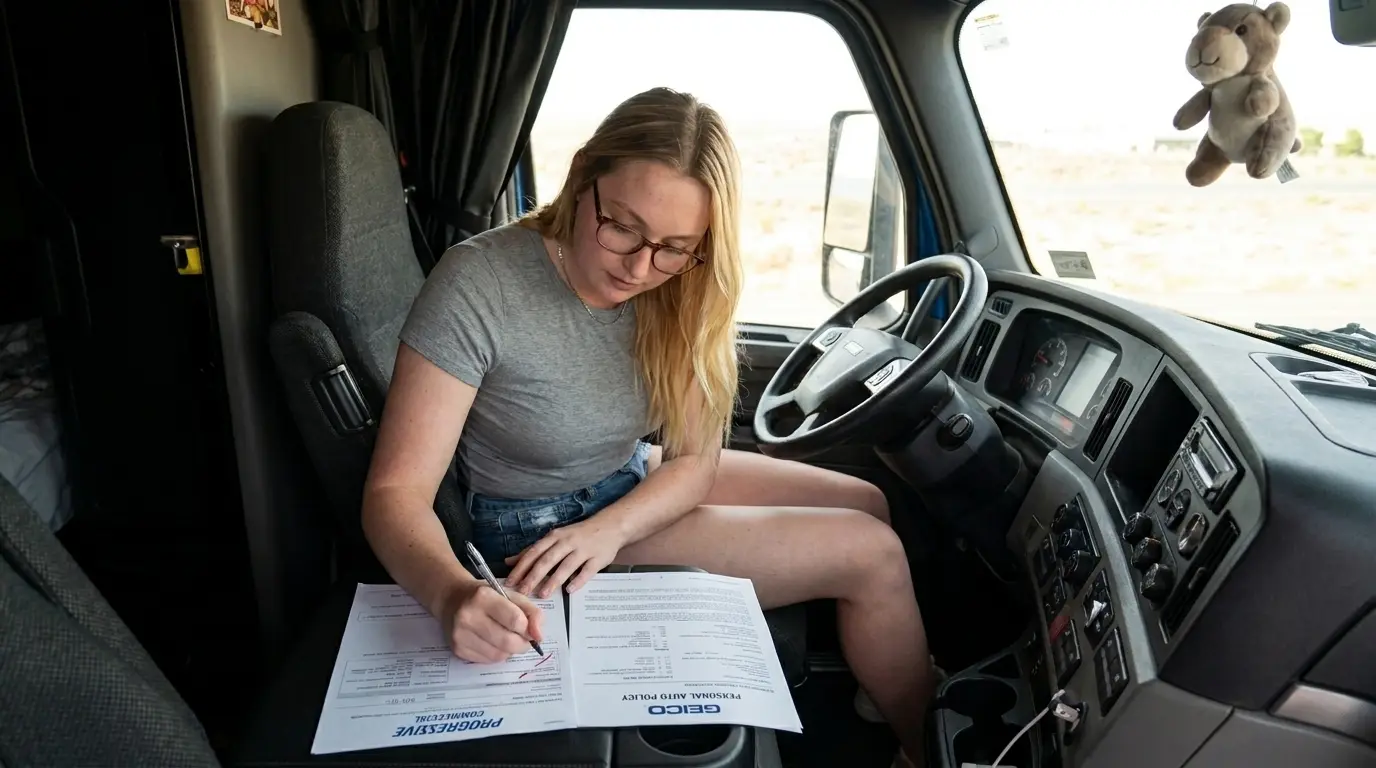
If you are an owner operator leased to a carrier — meaning you own your truck but haul under the carrier’s DOT and MC numbers — your insurance situation looks very different from a fully independent operator. The carrier’s primary liability policy covers you while you are under their dispatch hauling their freight. Your personal insurance responsibilities in this arrangement typically include:
- Bobtail insurance: Covers your truck when you are driving without a trailer and not under the carrier’s dispatch. Typically $400 to $900 per year.
- Physical damage: Covers your own truck for collision and comprehensive losses. The carrier’s policy does not cover your equipment.
- Occupational accident insurance: Since most leased owner operators are classified as independent contractors rather than employees, you are not covered by workers compensation. Occupational accident policies fill that gap. Typically $1,500 to $3,500 annually depending on benefit levels.
- Motor truck cargo: Some carriers include cargo coverage for leased operators. Many do not, or the limits are insufficient. Verify your lease agreement carefully.
The total insurance cost for a leased owner operator typically runs between $5,000 and $10,000 annually — significantly less than the $15,000 to $25,000 range for a fully independent operator.
That cost difference is one of the reasons many new owner operators choose to spend a year or two leased to a carrier before launching their own authority. The financial exposure is lower while your experience record is building.
The 8 Factors That Determine Your Owner Operator Insurance Premium
When I finally understood why my quotes were what they were, the pricing stopped feeling arbitrary. Here are the eight factors that insurers weigh most heavily when pricing owner operator coverage:

1. Years of CDL Experience
New CDL holders pay dramatically more than experienced drivers. The industry standard risk threshold is approximately two years of verified commercial driving experience. Below that line, expect to pay 40 to 80 percent more than what a five-year veteran pays for identical coverage. This penalty decreases each year as your clean record grows.
2. Motor Vehicle Record
Your complete driving history — commercial and personal — is pulled at every application and renewal. Major violations including DUI, reckless driving, and serious speeding convictions can add thousands to your annual premium or result in outright declination from standard market carriers.
Minor violations have smaller but still meaningful impacts. My clean MVR was the strongest asset I brought to my first owner operator insurance application.
3. Claims History
Prior insurance claims, particularly at-fault accidents, follow you in commercial insurance just as they do in personal auto. A single at-fault accident within the past three years can increase your primary liability premium by 25 to 50 percent. Multiple claims may push you into the non-standard market where rates are significantly higher.
4. Freight Type and Commodity
The cargo you haul affects both your cargo insurance premium and, to a lesser extent, your liability rates. General dry freight is priced most favorably. Refrigerated goods, high-value electronics, pharmaceuticals, and hazardous materials all carry higher cargo premiums. Some carriers will decline to insure certain high-risk commodities regardless of price.
5. Operating Radius and Lanes
Local and regional operators with defined, consistent lanes generally pay less than true long-haul operators running irregular routes across the full continental United States. More miles and more geographic variability equals more exposure in the insurer’s pricing model.
6. Truck Value and Age
Physical damage coverage is priced as a percentage of your truck’s stated or market value. Newer, higher-value trucks cost more to insure for physical damage.
However, trucks equipped with modern safety technology — automatic emergency braking, lane departure warnings, collision mitigation systems — can qualify for safety discounts on liability coverage that partially offset the higher physical damage cost.
7. Deductible Selections
Choosing higher deductibles on your physical damage and cargo coverage directly reduces your premium. The tradeoff is that you carry more financial exposure in the event of a claim. I raised my physical damage deductible from $2,500 to $5,000 in year two after building adequate cash reserves. That single change reduced my physical damage premium by $680 annually.
8. Garaging Location and State
Your home state and the zip code where your truck is garaged affect your premium through two mechanisms. States with higher litigation rates and larger average jury verdicts tend to have higher liability premiums across the board.
High-crime zip codes carry higher comprehensive coverage rates for physical damage. These are factors you cannot easily change, but understanding them helps you make sense of geographic premium differences.
How to Reduce Your Owner Operator Insurance Cost — What Actually Worked for Me
Generic advice about maintaining a clean record is true but not particularly useful when you are trying to bring a $20,000 annual premium down to something more manageable. Here is what actually moved the needle for me:
- Work with an independent broker, not a captive agent. Independent brokers access multiple carriers and can find coverage combinations that a single-carrier agent simply cannot offer. My switch to an independent broker in year two saved me $1,600 on my primary liability alone.
- Pay your full annual premium upfront. Monthly installment plans carry financing fees that typically add 10 to 15 percent to your total annual cost. Paying annually eliminated approximately $2,100 in fees in my second year.
- Install a dashcam immediately. A dual-facing dashcam documents your driving behavior and protects you in disputed liability situations. Several carriers offer documented discounts for dashcam-equipped vehicles, and the broader risk profile benefit contributed to improved renewal terms in my second and third years.
- Review your coverage limits annually. As your truck depreciates, your physical damage coverage limit should be adjusted to match current market value. Overinsuring a truck that has dropped $30,000 in value since you bought it means paying premiums on coverage you will never collect.
- Ask specifically about safety program discounts. Some carriers offer premium discounts for participation in formal safety programs, regular vehicle inspection documentation, or telematics monitoring programs. Many drivers never ask and never receive discounts they would have qualified for.
Mistakes That Will Increase Your Owner Operator Insurance Cost
I made some of these. Others I watched happen to drivers I know in online trucking communities. All of them are avoidable.
- Letting your policy lapse. Even a single day of lapsed commercial coverage creates a gap on your insurance history that raises rates at your next application. Set calendar reminders well ahead of renewal dates.
- Not disclosing all drivers who may operate your truck. If someone else drives your truck — even occasionally — and they are not listed on your policy, a claim during their operation may be denied entirely.
- Choosing minimum limits to lower premiums. Operating at the federal minimum of $750,000 in liability will disqualify you from working with most freight brokers who require $1,000,000 as a contractual minimum. The premium difference between $750,000 and $1,000,000 in limits is typically $300 to $600 annually. It is not worth the load restrictions.
- Not reading your policy exclusions. Standard owner operator policies contain specific exclusions around certain freight types, operating areas, and use cases. Operating outside those defined parameters and filing a claim can result in full denial regardless of how long you have been paying premiums.
The Real Cost of Going Independent — and Why It Is Still Worth It
I want to end with honesty rather than optimism that glosses over the real numbers.
Owner operator insurance for a fully independent operator is expensive. Budgeting $15,000 to $22,000 for your first year is realistic depending on your experience level, location, and freight type. That cost is real, it is non-negotiable, and it has to be factored into your business model before you file for authority — not after.

What I can also tell you is that my gross revenue in year one under my own authority was $187,000. After fuel, truck payment, insurance, maintenance, and operating expenses, my net was significantly less than that — but it was more than I had earned in any previous year of my working life, and more than I would have earned staying leased to a carrier on a cents-per-mile arrangement.
The insurance cost that felt crushing when I first saw that $21,600 quote became a line item in a business that works. It decreased as my record grew. It decreased as I learned how to shop it properly. And it became something I understood deeply rather than something that just happened to my bank account every year.
Know what you are buying. Know why it costs what it costs. And build a business where the insurance is a managed expense rather than a surprise.
Stella Brown is an independent owner-operator based in Columbus, Ohio, running dry freight lanes across the Southeast and Mid-Atlantic under her own authority. She writes about the real business of trucking — insurance, financing, authority setup, and the financial realities of running a one-truck operation. Three years in, she is still learning and still writing about it.
ENJOY TRUCKING WITH ME?


Hotshot Trucking Insurance: What It Really Costs, What You Actually Need, and How I Help Fellow Operators Stop Paying Too Much

Commercial Auto Insurance Quotes: How I Stopped Guessing and Started Comparing — A Complete Guide for Owner-Operators in 2026

Bobtail Insurance: What It Costs, What It Covers, and Why Skipping It Was Almost the Biggest Mistake of My Trucking Career

Will AI Replace Truck Drivers? Here Is What the Data Actually Says in 2026
